
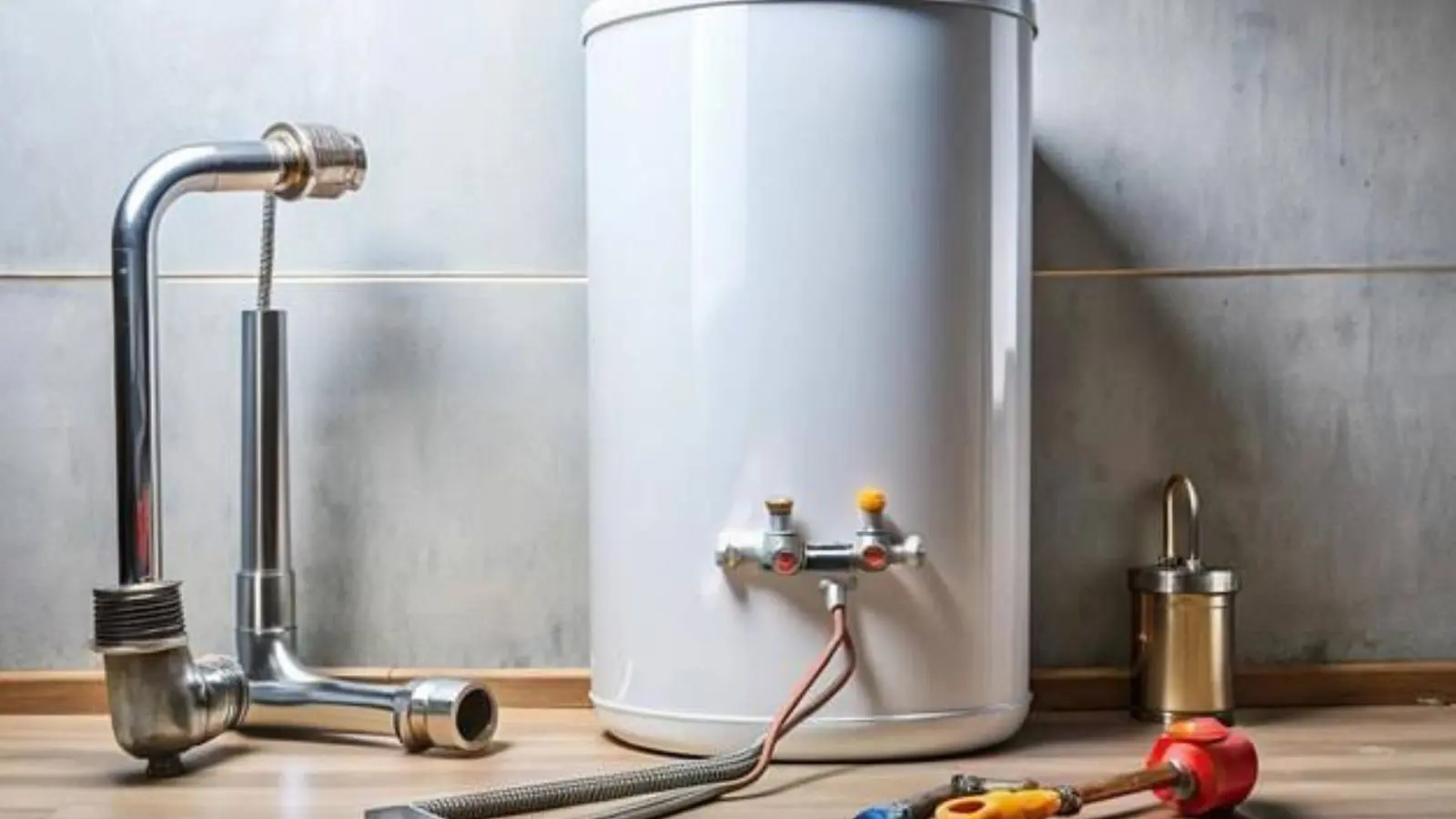
Water heater leak cleanup starts with stopping the leak, not mopping it. This line is answered 24/7, and while you wait you can close the cold water valve on top of the heater, switch off its power or gas, and keep everyone out of standing water near outlets.
A water heater leak is any release of water from the tank, its fittings or its relief valve. The cleanup covers the wet floor, wall bottoms and framing around it.
Tank failure or a loose fitting: finding where the water comes from
Not every leak means a dead heater. Water often runs down the jacket from a dripping fitting at the top, so the puddle below looks like a failed tank when the real culprit is a supply connection or a worn drain valve. Wipe the heater dry, tape a dry paper towel at each joint, and watch which one darkens first.
Water from the discharge pipe of the temperature and pressure relief valve is a different problem. That valve opens on purpose when pressure or heat climbs too high, so a steady drip there points to pressure, thermal expansion or a worn valve. Rust streaks and seepage at the base of the jacket usually mean the tank has corroded through, and a tank in that state is replaced, not patched.
| Where the water shows up | Likely cause | What it usually means |
|---|---|---|
| Base of the tank, rust streaks | Corroded steel tank | Replacement, plus drying the floor |
| Pipe running off the relief valve | High pressure, expansion or a worn valve | Plumber diagnosis, often a cheaper fix |
| Top connections, hot and cold lines | Loose or corroded fitting | Plumber repair, then dry the shelf and wall |
| Drain valve at the bottom | Worn valve or sediment buildup | Valve swap or tank flush |
Water heater leaking right now? Shut it down in this order
Do these steps in order, and skip any step that puts you near water and live electrical equipment. If you smell gas, hear hissing or see damaged wiring, leave the house and call the gas utility or 911 before you call the line. Same-day response is available when crews are available, including nights and weekends.
- Switch off the heat source. For an electric heater, turn off its breaker only if the panel is dry and you can reach it without stepping in water. For gas, turn the gas control to off or pilot.
- Close the cold water inlet valve above the heater. A lever handle turns a quarter turn, and a round wheel turns clockwise.
- If that valve will not close, shut the main water valve for the whole house.
- Let the water cool before you touch it or drain anything, because tank water can scald.
- Photograph the heater, the label and the wet area before you move anything.
What a slow leak does to the floor, wall bottoms and framing
Water heaters sit in closets, utility rooms and basements, so the water rarely stays where it starts. It runs under the wall plate, soaks the bottom of the drywall, and wicks up behind baseboards a few inches higher than the visible stain. In a basement it can also reach a finished room next door, which is why the work often overlaps with basement water damage cleanup.
A leak from the supply side is usually clean water at first. The longer it sits in insulation, carpet pad or particleboard, the more that changes, and S500 treats aged water as a higher category than fresh supply water.
- A pan under the heater that stays wet or holds rust-colored water.
- Paint bubbling or drywall softening within a foot of the floor.
- A musty smell in a closet or utility room that was not there last month.
Water spreading or a smell you cannot place? Talk to dispatch now.
(630) 580-6401How crews dry the room around a water heater
The visit starts with a moisture meter and a thermal imaging camera, which show how far the water travelled past what you can see. Extraction units pull standing water first. Then crews pull baseboards, open the wall bottom if the drywall is wet through, and set air movers and LGR dehumidifiers to dry the framing and subfloor.
Drying gets documented with daily moisture readings so you know when the structure is back to normal, following the ANSI/IICRC S500 water damage standard. For the pump side of the job, see water extraction, and for the drying side, see structural drying.
Night and weekend calls get the same assessment as weekday ones, and dispatch looks for the nearest available crew.
Dry out only, repair the heater, or replace it: how to decide
The heater itself is a plumber's job. The restoration side is the water the heater left behind. These two jobs run side by side, and the order matters, because a dry room with a leaking heater gets wet again.
| Situation | Typical call | Who handles it |
|---|---|---|
| Relief valve dripping, tank dry | Valve or pressure fix | Plumber |
| Fitting leak, small wet area | Repair fitting, dry the floor | Plumber, then drying crews |
| Tank leaking at the base | Replace the heater | Plumber, drying crews in parallel |
| Water reached drywall or subfloor | Structural drying before closing walls | Drying crews |
| Heater in a rental unit | Notify the landlord, document first | Landlord and plumber, drying crews |
What changes the cost of a water heater leak cleanup
Cleanup cost follows the water, not the heater. Scope and price get explained before work starts, and the list below shows what moves the number. Insurance note: sudden and accidental water damage is often covered, while slow leaks and neglect often are not, so ask your insurer what your policy actually covers. To price your actual job, call (630) 580-6401.
- How many square feet of floor and wall bottom got wet.
- Whether the subfloor, insulation or carpet pad must be removed.
- How long the leak ran before anyone saw it.
- How many air movers and dehumidifiers the room needs, and for how many days.
- Whether the heater sits in a tight closet that slows access.
Replacement permits, renters and the water supply in Bensenville
The Village of Bensenville lists water heater replacement among its residential permit items. Before a plumber swaps the tank, ask the Village Community and Economic Development office whether a permit applies, and call 630-350-3413 to schedule an inspection with at least 24 hours notice.
About half of Bensenville homes are rented, so tenants and landlords both need a paper trail. Tenants should photograph the leak and tell the landlord in writing the same day. Landlords should keep the plumber invoice and drying logs together for the insurer.
Water here is Lake Michigan water, treated by the City of Chicago and delivered by the DuPage Water Commission. If you cannot tell whether a leak is on your side of the meter, call Village Public Works at (630) 350-3435 before you pay for a repair. Crews also serve nearby Franklin Park if your leak is just over the line.
Questions about Water Heater Leak Cleanup
Do you handle water heater leak cleanup emergencies at night or on weekends in Bensenville?
Yes. Calls go to a 24/7 dispatcher who sends licensed and insured professionals. Same-day response is available when crews are available, and the first thing the dispatcher will ask about is whether the water and power are shut off.
Should I drain the tank myself?
Only after the power or gas is off and the water has cooled. Hot tank water can scald, and draining a tank that is still heating can damage the elements. If the tank is leaking from the base, draining it will not stop the damage already done to the floor.
Can I keep using hot water after a leak?
Not until a plumber checks the heater. A leaking tank cannot be trusted, and running it can add water to the floor each cycle. Keep the cold supply to the heater closed in the meantime.
Does homeowners insurance cover a water heater leak?
Sudden and accidental leaks are often covered, and slow leaks that went on for months often are not. The heater itself is usually treated differently from the water damage it caused. Photograph everything, keep receipts, and ask your insurer what applies before permanent repairs begin.
Do I need a permit to replace a water heater in Bensenville?
The Village lists water heater replacement as a residential permit item. Ask the Village Community and Economic Development office how the permit works for your address, and check whether your plumber handles it.
Is water from a water heater considered clean water?
Fresh supply water starts out clean, which S500 calls Category 1. It can move to a higher category if it sits for a day or two or touches dirty materials, which is one reason to call early. A floor drain backup near the heater is a different case and may involve sewage backup cleanup.
Still unsure which page fits your situation? Dispatch can sort it out in one call.
(630) 580-6401