
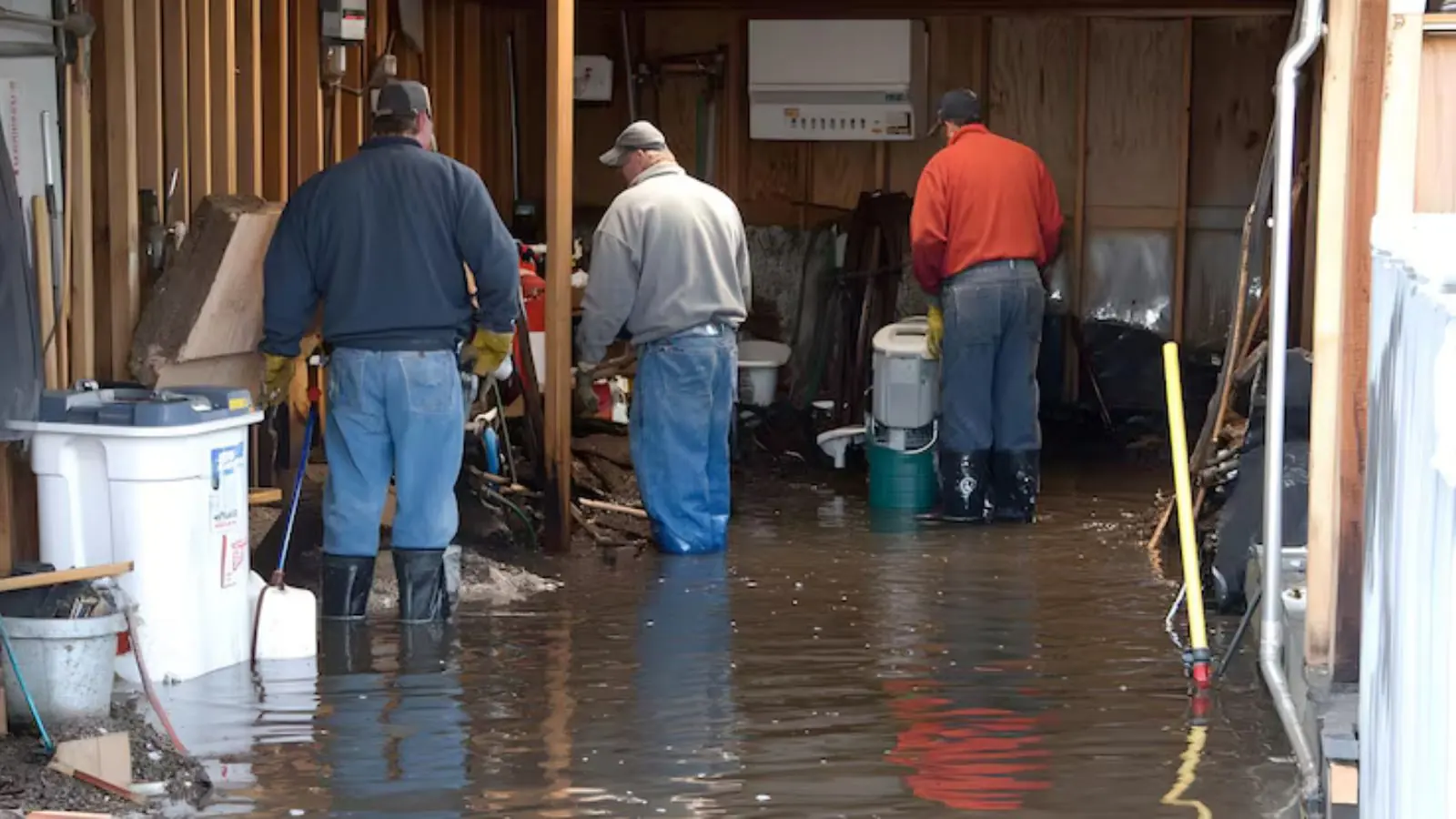
Standing water on a floor is an emergency, and the dispatch line is open 24/7. While you wait, stop the source, shut the main water valve, cut power to wet areas only if the floor is dry where you stand, lift valuables off the floor, and keep people and pets away from any water that may be contaminated.
Water extraction is the removal of standing water and saturated material from a building using pumps and vacuum units, so drying can start. It is the first hands-on step, not the last.
Standing water on the floor right now
Water above the baseboard, carpet that squishes underfoot, or an inch across a basement slab calls for extraction, not a mop. Water keeps wicking into drywall, pad and framing for as long as it sits. Dispatch aims for a same-day visit when it is available, including after hours and on weekends, so call before you start dragging furniture around.
Look at where the water sits relative to outlets, cords and the panel before anyone steps in. If it reaches any of them, or you smell gas, stay out and call the electric utility, the gas utility or 911 first, then call the line.
- Shut the main water valve if a supply line is still running.
- Switch off power only at a panel you can reach while standing on dry floor.
- Lift rugs, boxes and electronics onto counters or furniture.
- Photograph the water line on walls and belongings before anything moves.
- Keep children and pets out of any water that may have come from a drain or a creek.
Pumps and extraction units, and where each one fits
Pump choice depends on depth and on what is floating in the water. Deep, clear water suits a submersible pump. Gritty or leafy water would clog that pump, so crews switch to a trash pump with a wider impeller opening and run the discharge hose outside.
| Equipment | Best for | Limit |
|---|---|---|
| Submersible pump | Several inches of water in a basement or sunken room | Cannot lift the last thin film off the slab |
| Trash pump | Muddy water carrying silt, leaves or debris | Too coarse for the final inch |
| Truck-mounted extraction unit | Wet carpet and pad across large areas or a commercial floor | Needs truck access and a hose route from the street |
| Portable extractor with wand | Carpet and pad in one or two rooms | Slow when the water is deep |
| Wet-dry vacuum | Stair treads, closets and corners | Small tank, not suited to a whole floor |
What extraction does and what it does not do
Extraction removes bulk water. It can take a flooded room down to damp surfaces in one visit, and it pulls a surprising amount out of carpet and pad. That is often the gap between a job that dries in place and one that needs tear-out.
It does not dry the building. Water soaked into drywall, baseboards, subfloor and studs stays there and slowly evaporates into the room air. Moisture meters and thermal imaging cameras find it, and air movers and LGR dehumidifiers pull it out, which is covered on the structural drying and dehumidification page.
Extraction also does not repair the source, and it does not make dirty water safe. A floor wet from sewage or a creek still needs cleaning and usually removal of porous materials, as described under sewage backup cleanup.
Water spreading or a smell you cannot place? Talk to dispatch now.
(630) 580-6401Carpet, pad, hardwood and slab after the water is out
What survives depends on the material, the water source and how fast the water came out. Clean supply-line water caught early leaves more options than anything that sat overnight.
Carpet
Often extracted in place and saved when the water was clean and removal was quick. The pad underneath holds water like a sponge and is the first layer crews usually cut out.
Cushion and pad
Low-cost to replace and slow to dry, so it is normally discarded even when the carpet above it is kept. Leaving it risks a musty room for weeks.
Hardwood
Boards cup when moisture rises from below, and surface extraction helps only a little. See hardwood floor water damage repair for drying mats and sanding decisions.
Concrete slab
A bare slab dries well once standing water is gone, but floor coverings glued to it can trap moisture. Crews check with a meter before anything goes back down.
What changes the cost of water extraction
Price follows the work in front of the crew, so a fair number comes after someone has seen the water. The main factors are listed below.
Sudden and accidental water, such as a failed supply line, is often covered by a homeowner policy, while slow leaks and neglect often are not. Photograph everything, keep receipts for emergency work, and ask your insurer what it needs before permanent repairs begin. Expect the scope and price to be spelled out before anyone starts. Call (630) 580-6401 and describe what you are seeing.
- How deep the water is and how many square feet it covers.
- Whether the water is clean, gray or contaminated, which changes protective gear and disposal.
- Which pump and unit the job needs, and whether a truck can reach the house.
- How much carpet, pad or flooring has to be removed after extraction.
- Time of day, since a night or weekend dispatch costs more to staff than a weekday call.
Rented homes, shared buildings and the water in the pipes
Census QuickFacts puts owner-occupied housing in Bensenville at 50.8 percent, so about half of homes are rented. That means the person standing in the water is often a tenant while the person who decides is a landlord. If you rent, call your landlord or property manager right away and photograph the water before it is pumped, because that record settles questions later.
Tap water here is Lake Michigan water treated by the City of Chicago, carried by the DuPage Water Commission and distributed by the Village Public Works Utilities Division. A supply-line break therefore starts as clean water, but clean water does not stay clean once it soaks into materials, so waiting changes the job. If water is rising in the street or you suspect a village main, Public Works answers at (630) 350-3435.
After the pumps leave
A visit does not end when the hose is coiled. Crews check how far the water traveled, because it usually went farther than the wet patch suggests. Basement jobs often continue under basement water damage cleanup, and rising outdoor water follows the rules on the flood damage cleanup page.
Crews serve nearby towns too, including Franklin Park, so a call from just outside the village line gets the same dispatch.
- Find and confirm the source is stopped.
- Extract standing water from floors, carpet and pad.
- Map moisture in walls, subfloor and cabinets with meters and a thermal camera.
- Decide what comes out and what dries in place.
- Set air movers and dehumidifiers and schedule moisture readings until the materials are dry.
Questions about Water Extraction
Do you handle water extraction emergencies at night or on weekends in Bensenville?
Yes. The dispatch line runs 24/7 and sends licensed and insured restoration professionals. same-day help is offered when a crew is open, so call at any hour and say how deep the water is and where it came from.
How long does water extraction take?
It depends on depth, floor area and the equipment on site. A few inches in one room is a shorter visit than a whole flooded basement, and the dispatcher cannot name an arrival time ahead of the call. What matters is starting before the water reaches walls and cabinets.
Can I use a shop vacuum myself while I wait?
For a small spill, yes, if the vacuum is rated for wet pickup and the cord and outlet are dry. For anything more than a puddle, a household unit is too small and the electrical risk is real. Lift items off the floor and wait for pumps.
Is the water from a burst pipe safe to touch?
At first it is usually clean supply water, but it picks up dirt from floors and materials as it spreads. Treat it as unsafe if it touched anything contaminated, or if electrical equipment is in it.
Does the carpet have to come out after extraction?
Not always. Carpet that got clean water and was extracted quickly can sometimes be saved, while the pad is usually replaced. Water from a sewer or a creek is a different case, and porous materials are normally discarded.
Does extracting the water prevent mold?
Extraction helps, because mold needs moisture, but surfaces and wall cavities must also be dried. If mold shows up later, testing and remediation follow ANSI/IICRC S520, and health questions belong with a physician.
Still unsure which page fits your situation? Dispatch can sort it out in one call.
(630) 580-6401