
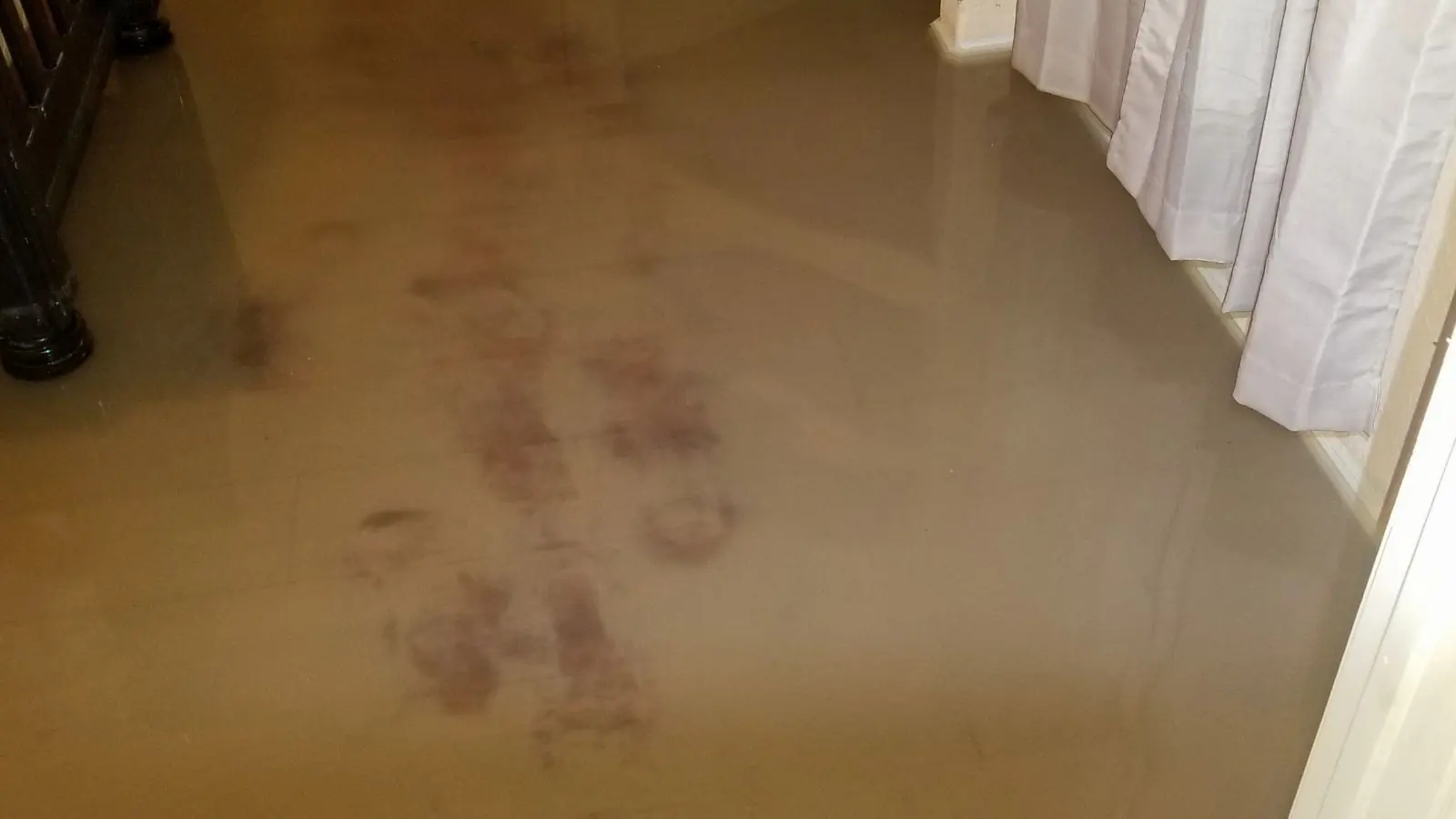
Water damage categories are a three-step scale of how contaminated floodwater or leak water is. Category 1 is clean, Category 2 is significantly contaminated, and Category 3 is grossly contaminated. The scale comes from ANSI/IICRC S500, the published standard for professional water damage restoration.
The category matters because it drives safety and material decisions. This guide defines each one in plain words, shows how water can slide from one to the next, and explains what that means for your floors and walls.
Category 1: clean water at the source
Category 1 water comes from a sanitary source and does not pose a substantial risk from contact at the moment of release. Think of a broken supply line, an overflowing sink with clean water, or a water heater that has let go. Rain falling through a roof opening is sometimes put in this group too, though it can pick up dirt on the way.
The word at the source is doing real work. Clean water is only clean until it meets something else.
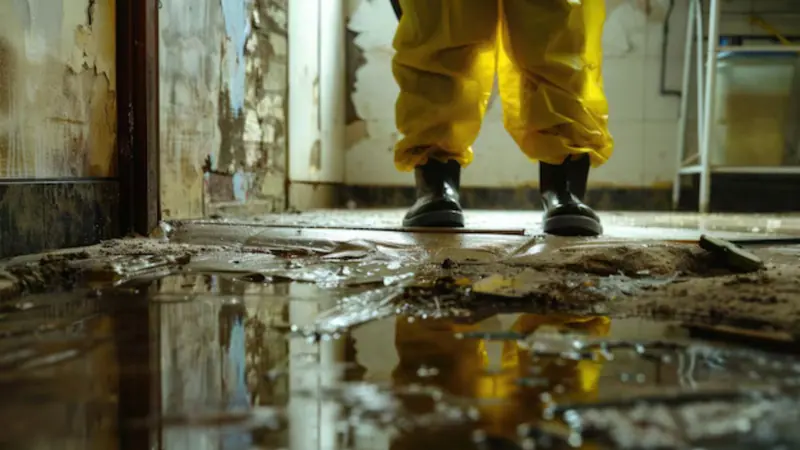
Category 2: contaminated, not the worst
Category 2 is sometimes called gray water. It carries enough contamination to make people uncomfortable if they contact it or swallow it. Typical sources are a washing machine or dishwasher discharge, a toilet overflow with urine but no feces, or a sump pump failure.
Materials that soak up this water, such as carpet pad and upholstery, are often removed instead of dried. Hard, nonporous items can usually be cleaned and saved.
Category 3: grossly contaminated
Category 3 is the most serious. It includes sewage, toilet backups that carry waste, rising floodwater from rivers and creeks, and water from outside that has run across the ground. Standing water that has soaked structural materials and supported growth can also reach this level.
These losses call for protective equipment, containment and removal of porous materials. Do not wade in, and keep children and pets out. For electric or gas concerns, call the utility or 911 before anyone else.
Category, source and response at a glance
The table connects each category to common sources and the usual response. It is a general pattern, and a professional assessment decides the actual plan.
| Category | Typical source | Usual handling of porous materials | Usual handling of hard surfaces |
|---|---|---|---|
| Category 1 | Supply line, faucet, tub overflow of clean water | Often dried in place if caught quickly | Dried and cleaned |
| Category 2 | Washer or dishwasher discharge, sump pump failure | Often removed, such as carpet pad | Cleaned and disinfected, then dried |
| Category 3 | Sewage, creek or river flood, ground-level surge | Removed and discarded | Cleaned and disinfected with protection |
| Moving up | Clean water left in place and exposed to soil or growth | Reassessed, may become removal | Reassessed and cleaned more thoroughly |
Not sure which way to go? Talk it through with dispatch.
(630) 580-6401How water can move up a category
Categories are not fixed labels. Clean water that sits can pick up bacteria from carpet, soil, dust and debris, and standing water in a hidden cavity can grow worse without anyone seeing it. The standard recognizes that time and temperature affect the category, so a professional rechecks what the water has become.
This is why a Category 1 leak that was ignored for days can be treated differently from the same leak stopped on day one. No hour threshold applies to every house, and the assessment depends on the conditions you have, not a clock.
Bensenville water sources and their categories
The Village of Bensenville says it cannot prevent flooding, and it names Willow Creek, Silver Creek (also called Bensenville Ditch) and Addison Creek as separate flood sources. Creek or surface water entering a basement is generally treated as Category 3, so a flooded basement near any of them is not a clean-water job even if the water looks clear.
The Engineering Division at (630) 350-3435 can help you find out whether a property is in a floodplain, and FEMA's flood map service shows the same.
For scale, O'Hare recorded 5.55 inches of rain on April 17 and 18, 2013, according to NWS Chicago, a record April two-day total. That is regional context and not a statement about any one street. It shows that heavy storms can overload drains and creeks, and that a sewer backup or overland flow into a basement can happen in a wet spell.
What the category means for your materials
Drywall, insulation, carpet and pad are porous, and they soak up whatever is in the water. Under a higher category, they tend to be removed. Tile, sealed concrete, metal and many plastics are nonporous and can be cleaned and kept.
Wood falls in between. Solid hardwood from a clean source can sometimes be dried in place, and from a contaminated source it often cannot. Ask the company to name what it plans to remove and why, and to tell you which category it assigned.
Why the category changes the safety rules
Contaminated water is a safety issue before it is a repair issue. Gloves, boots and eye protection are the minimum for anything above Category 1, and crews working Category 3 losses add respirators and disposable coveralls. Anything that touches the water can carry contamination to other rooms on shoes, tools and clothing.
That is why crews set up barriers, control foot traffic and bag removed materials on site. If a company tells you it will just dry a sewage-soaked carpet, ask how it reached that decision.
What to do first, by category
For a clean supply-line break, shut off the water, move valuables and call for water extraction. For gray water, avoid skin contact and keep the area closed off. For sewage or flood water, stay out and call a professional for sewage backup cleanup or flood damage cleanup.
If you are unsure, treat the water as the dirtier category until someone qualified has looked. Residents of Schiller Park and Stone Park are in the same position, and ask any company whether its crews work to S500.
Questions about this topic
What is the difference between Category 1, 2 and 3 water?
Category 1 is clean at its source, Category 2 carries significant contamination, and Category 3 is grossly contaminated, as with sewage or rising floodwater. The scale comes from ANSI/IICRC S500.
Can Category 1 water become Category 3?
It can move up if it sits and picks up contaminants from soil, materials or growth. Reassessment is part of professional practice. There is no single time limit that applies to every home.
Is flood water in a basement always Category 3?
Water from outside, such as creek overflow or ground-level flow, is generally treated as Category 3. A pipe break in the same basement may be Category 1. A professional should confirm.
Can I clean Category 3 water myself?
It is not recommended. It involves protective gear, disposal and removal of porous materials. Keep people and pets out and call a restoration company that works to S500.
Which category applies to a Bensenville basement after a heavy storm?
If water entered from outside, from a creek, from the ground or from the sewer, it is generally treated as Category 3. If it came from a burst pipe indoors, it may be Category 1. Photograph the source and call for an assessment.
Still unsure which page fits your situation? Dispatch can sort it out in one call.
(630) 580-6401