
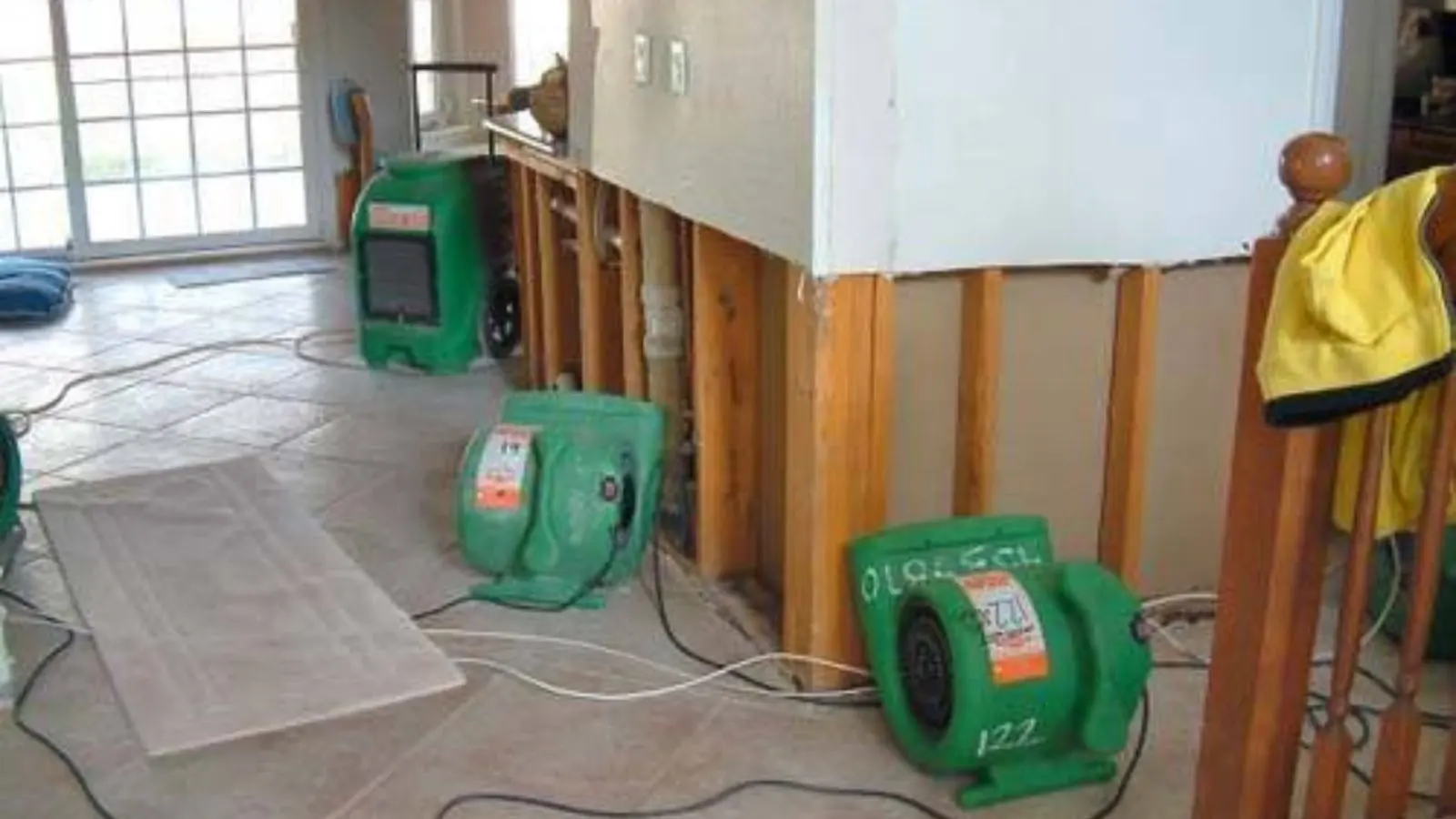
Wall and drywall water damage starts when water reaches the paper face or gypsum core of a wall, either from a pipe inside the cavity or from a leak that ran down from above. Gypsum soaks up water quickly and loses strength, and the insulation behind it can hold water long after the paint looks dry.
The repair choices are drying the wall in place, cutting out a section, or replacing the board. This page covers how each choice is made and what finishing involves.
How water gets inside a wall cavity
Water reaches walls from three directions. Pipes in the cavity can pinhole or burst, water from a floor above can run down inside the stud bays, and floodwater or a spill can wick up from the floor. Each route leaves a different pattern of staining.
A wall with a supply line behind it may be wet far above the stain you can see. A wall hit from below is typically wet in a band at the baseboard that climbs as time passes. Crews probe both with a moisture meter before deciding anything.
Signs a wall is holding water
Wet drywall is often visible before it fails. The signs below are the usual cues, and one alone is reason enough to have the wall checked.
- Paint bubbling, blistering, or peeling in patches.
- Brown or yellow stains that grow after the leak seems stopped.
- Baseboards that swell, gap, or pull away from the wall.
- Drywall that feels soft or crumbly when pressed.
- A musty smell in a room with no visible leak.
Dry in place, cut out, or replace: a decision table
The choice depends on how long the wall was wet, whether the water was clean, and what is inside the cavity. A thermal imaging camera and a moisture meter show the edges of the wet zone.
| Condition | Likely approach | Why |
|---|---|---|
| Clean water, caught early, board still firm | Drill weep holes and dry in place | Gypsum often keeps its strength if dried quickly |
| Board soft, sagging, or stained through | Cut out and replace the section | Soft gypsum does not recover |
| Wet insulation behind the board | Open the cavity and remove the insulation | Insulation holds water against framing |
| Water rose from the floor | Flood cut above the wet line | Removes wicked areas and exposes studs to dry |
| Contaminated water | Remove the affected board and insulation | Contaminated material is not cleaned in place |
Not sure which way to go? Talk it through with dispatch.
(630) 580-6401Baseboards, insulation, and the cavity behind the paint
Baseboards swell first because they absorb water at the end grain. If the trim is painted solid wood it can sometimes be pulled, dried, and reinstalled. MDF trim usually crumbles and is replaced.
Insulation is the hidden problem. Fiberglass batts can hold water against the studs and sheathing, and spray foam can trap moisture against framing. A flood cut, which is a straight cut made a set height above the wet line, exposes the cavity so equipment can dry the framing. The drying plan follows the same methods covered on the structural drying and dehumidification page.
From open cavity to finished wall
Once the studs read dry, the repair is a build-up of layers. Taking the sequence in order is what keeps a patch from showing through the paint.
- Confirm the framing reads dry on a moisture meter and replace any removed insulation.
- Hang new drywall that matches the thickness of the old board.
- Tape, mud, and sand the joints in thin coats so they feather out.
- Seal the patch with primer so it does not flash through the finish coat.
- Paint the full wall, corner to corner, since a spot repair rarely matches aged paint.
What moves the price of a wall repair
A wall repair price follows how much material is opened and how much finishing is needed. These are the main factors, and a crew can name a real number only after reading the wall.
Policies often treat a sudden, accidental release of water differently from a slow leak that went unrepaired. Read the policy wording and ask your insurer before permanent repairs. Your own scope sets the real figure, so call (630) 580-6401.
- Linear feet of wall opened, and how high the cut has to go.
- Insulation type and whether it must be removed and replaced.
- Trim and baseboard material, and whether it can be reused.
- Number of rooms that need paint to match.
- Whether texture, wallpaper, or tile has to be rebuilt.
Ceilings, permits, and who to ask in Bensenville
A wall stain that began at the top often means water came through the ceiling, which is a separate repair covered under ceiling water damage repair. Fixing the wall without finding the upper source means the stain returns.
The Village lists water heater replacement and sanitary sewer replacement among residential work that needs a permit, along with additions and remodels. If a wall opening is tied to either job, call Community and Economic Development at 630-350-3413 and book inspection scheduling with at least 24 hours notice. For drywall repair alone, ask the Village whether a permit applies.
Pipe leaks that wet a wall are covered on the burst pipe water damage page. Crews also serve nearby towns such as Wood Dale.
Questions about Wall and Drywall Water Damage
Can water-damaged drywall be dried instead of replaced?
Sometimes. Clean water caught early, with a firm board, can often be dried in place with air movers and dehumidifiers.
Soft, sagging, or contaminated drywall is cut out.
What is a flood cut?
A flood cut is a straight cut through the drywall made a set height above the wet line. It removes the wet board and opens the cavity to dry.
Studs are exposed and the wall is rebuilt after drying.
Why do I have to replace insulation inside the wall?
Wet insulation holds water against framing and sheathing. It dries slowly inside a closed wall.
Removing it lets the studs dry and keeps moisture from lingering.
Why does the stain keep coming back after I paint?
Stains bleed through ordinary paint. A stain-blocking primer is needed, and the wall has to read dry first.
A returning stain can also mean a source is still leaking.
How do I know if there is water inside the wall?
A moisture meter and thermal imaging camera show wet areas without cutting. Look for bubbling paint, soft baseboards, or swelling.
Call if a wall stays damp after a leak has stopped.
Do I need a permit to repair water-damaged drywall in Bensenville?
The Village does not list drywall repair on its residential permit list. Ask Community and Economic Development whether a permit applies to your project.
Water heater and sanitary sewer replacement are listed.
Still unsure which page fits your situation? Dispatch can sort it out in one call.
(630) 580-6401