
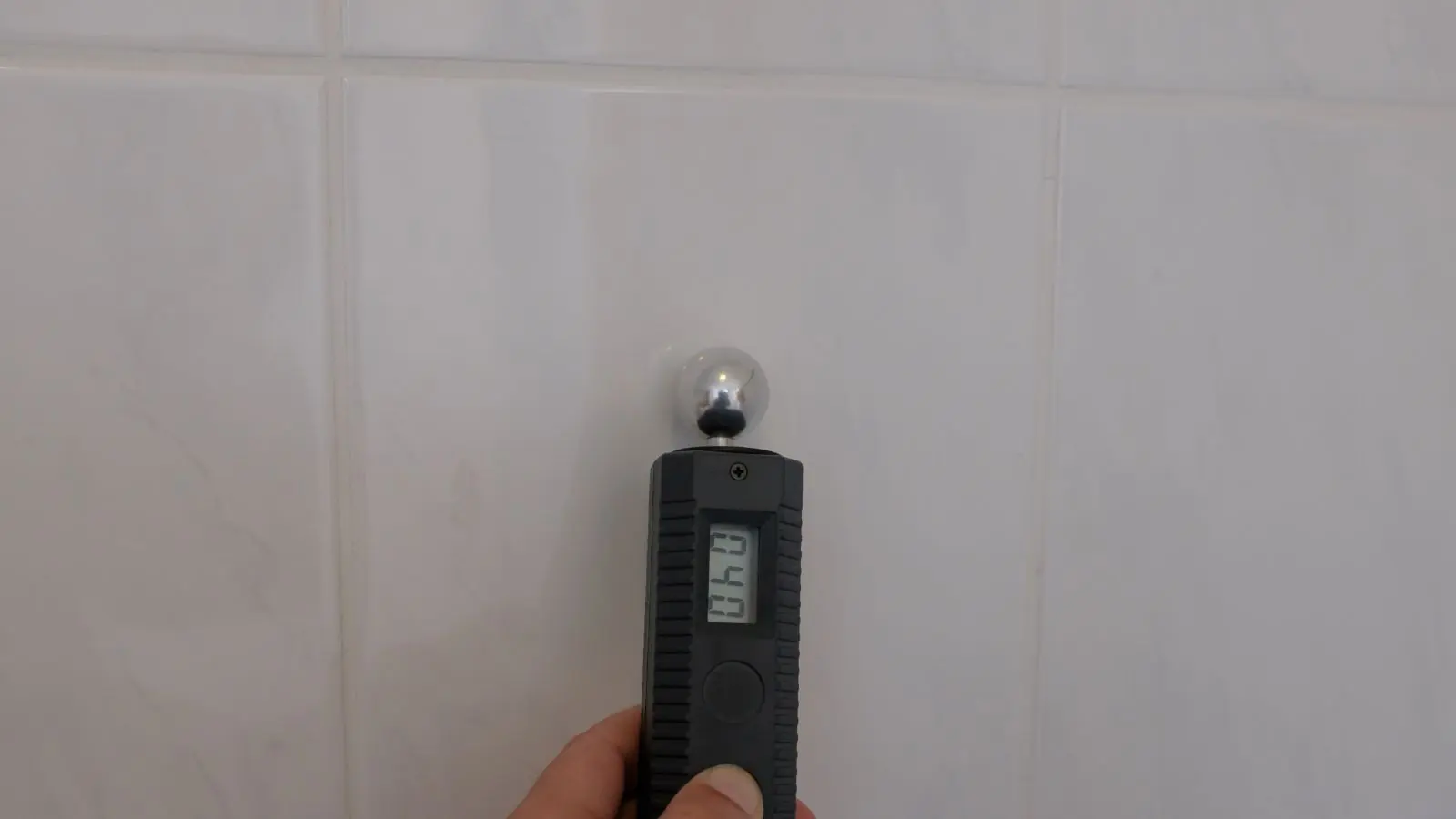
Structural drying is the controlled removal of moisture from framing, subfloor, drywall and concrete using air movers, LGR dehumidifiers and daily moisture readings. Surfaces that feel dry can still hold water behind paint, under flooring and inside wall cavities.
The goal is not a dry feeling. It is readings that match a dry reference for the same materials in your house, recorded and checked before the equipment leaves.
Wet carpet that will not dry, a musty smell after a leak, damp walls
Many people reach this page after running fans for a week and still finding a carpet edge that feels cool, a baseboard that has started to lift, or a closet that smells musty after a leak was fixed. Those are signs that water went deeper than the surface you cleaned.
The trade that handles that problem is structural drying. It finds where the moisture went, places equipment to move it out, and measures the result until it is done.
Moisture mapping before any equipment goes down
A crew starts with a moisture meter, a thermal imaging camera and a hygrometer. The meter gives numbers for drywall, wood and concrete, the camera shows cool patches where evaporation is happening, and the hygrometer records air temperature and humidity. Readings from an unaffected room set the dry reference.
Every wet spot is marked and logged, so the map shows which rooms are wet, which are borderline and which are fine. That map decides how many machines you need and where they go.
Air movers and LGR dehumidifiers do different jobs
Air movers push dry air across wet surfaces so moisture leaves the material. LGR dehumidifiers, short for low grain refrigerant, pull that moisture out of the air so it does not settle somewhere else. Using one without the other leaves a room humid or a wall wet.
| Equipment | What it does | Where it works best |
|---|---|---|
| Air mover | Moves air across the surface to speed evaporation | Floors, lower walls, carpet edges |
| LGR dehumidifier | Removes moisture from the air | Closed rooms where water is heavy |
| Injection or cavity drying | Pushes dry air into closed wall or toe-kick spaces | Behind baseboards and under cabinets |
| Hygrometer and meter | Measures progress each visit | Every affected room |
Drying goals, daily logs and when drying is done
ANSI/IICRC S500 is the published standard for water damage restoration, and it is built around documented drying goals. You can ask any company whether its crews work to S500. A good answer mentions readings, targets and records.
Crews return to check meters and adjust equipment, then record the numbers. When materials hit their targets, the equipment comes out. If a stubborn spot stays wet, the log shows it and the plan changes.
- Set a dry reference from unaffected material of the same kind.
- Record starting readings in every wet room.
- Place air movers and dehumidifiers, and close off the drying zone.
- Check readings on each visit and move or add equipment.
- Confirm that all affected materials meet their targets before pickup.
Not sure which way to go? Talk it through with dispatch.
(630) 580-6401Where water mitigation ends and structural drying begins
Water mitigation is the early work of stopping damage from spreading, such as extraction, moving contents and removing materials that cannot dry in place. Structural drying follows it, and it carries the job to a finish line. Without it, the first stage leaves moisture behind the surface.
If standing water is still present, start with water extraction, then continue here. When the source was a burst line, our burst pipe water damage page covers stopping it.
Dry in place or open it up
Not every wet material has to come out. The choice depends on the material, how long it was wet and what kind of water reached it. Contaminated water changes the answer, and mold needs moisture to grow, so lingering dampness is the thing to avoid.
| Material | Often dried in place | Often removed |
|---|---|---|
| Hardwood and subfloor | Short exposure, cupping not yet set | Long exposure or buckling |
| Drywall | Clean water, intact paint, short exposure | Sagging, crumbling or contaminated |
| Carpet | Clean water with the pad lifted | Pad that stayed wet or dirty water |
| Concrete slab | Almost always dried in place | Rarely removed |
| Insulation | Sometimes in open cavities | Wet batts in closed walls |
What drives the cost of structural drying
Drying is priced by what is wet, how long machines run and how hard the moisture is to reach. Nothing starts until the scope and price are explained, and the number of equipment days is the biggest swing. Sudden and accidental water damage is often covered by insurance, gradual leaks often are not, so put the coverage question to your insurer.
Call (630) 580-6401 to talk through your own situation.
- Number of rooms and square footage affected.
- Type of materials, since concrete and hardwood dry more slowly than drywall.
- Water category and how long it sat before drying started.
- Number of air movers and dehumidifiers and days they run.
- Access, such as finished basements, cabinets and tight wall cavities.
Drying a Bensenville house when walls come open
Because about half of Bensenville homes are rented, equipment placement often needs a landlord's okay and a tenant's cooperation. Tell the landlord before machines run for several days, because they use power and make noise. Keep doors to drying rooms closed so the dehumidifiers work on a small volume of air.
If walls or flooring come out, ask the Village Community and Economic Development office at 630-350-3413 whether a permit applies. Related work includes wall and drywall water damage repair and carpet water damage restoration. We also serve nearby towns such as Addison, and if a damp area has gone musty, see mold remediation.
Questions about Structural Drying
Why is my carpet still damp after days of running fans?
Fans alone move air but do not remove moisture from the room, and the pad and subfloor underneath can stay wet. A moisture meter and an LGR dehumidifier usually tell the story. A crew can map the wet area and set up a plan.
Why does my house smell musty after a leak was fixed?
A musty smell often means moisture is still trapped in a wall cavity, under flooring or behind baseboards. Fixing the leak stops new water, but it does not dry what already got wet. A moisture map shows where, and testing and any remediation belong to mold work under S520.
How long does structural drying take?
It depends on materials, water category and how long they were wet. Drywall may take a few days, while hardwood and concrete can take longer. Your crew sets target readings and checks them on each visit.
Are the machines loud, and can I stay in the house?
Air movers and dehumidifiers are noticeable, and they run around the clock during drying. Many people stay in the house but close off the drying rooms. Ask the crew what to expect for your layout.
What is the difference between water mitigation and structural drying?
Water mitigation is the early work of stopping damage, removing standing water and taking out what cannot be saved. Structural drying is the measured drying of what stays, with logs that show when it is done.
Will insurance pay for drying equipment?
Sudden and accidental water damage is often covered, and drying is usually part of that repair. Gradual leaks and neglect often are not, and floods usually need separate flood coverage. Review your policy and confirm with your insurer, and keep your drying logs and receipts.
Still unsure which page fits your situation? Dispatch can sort it out in one call.
(630) 580-6401