
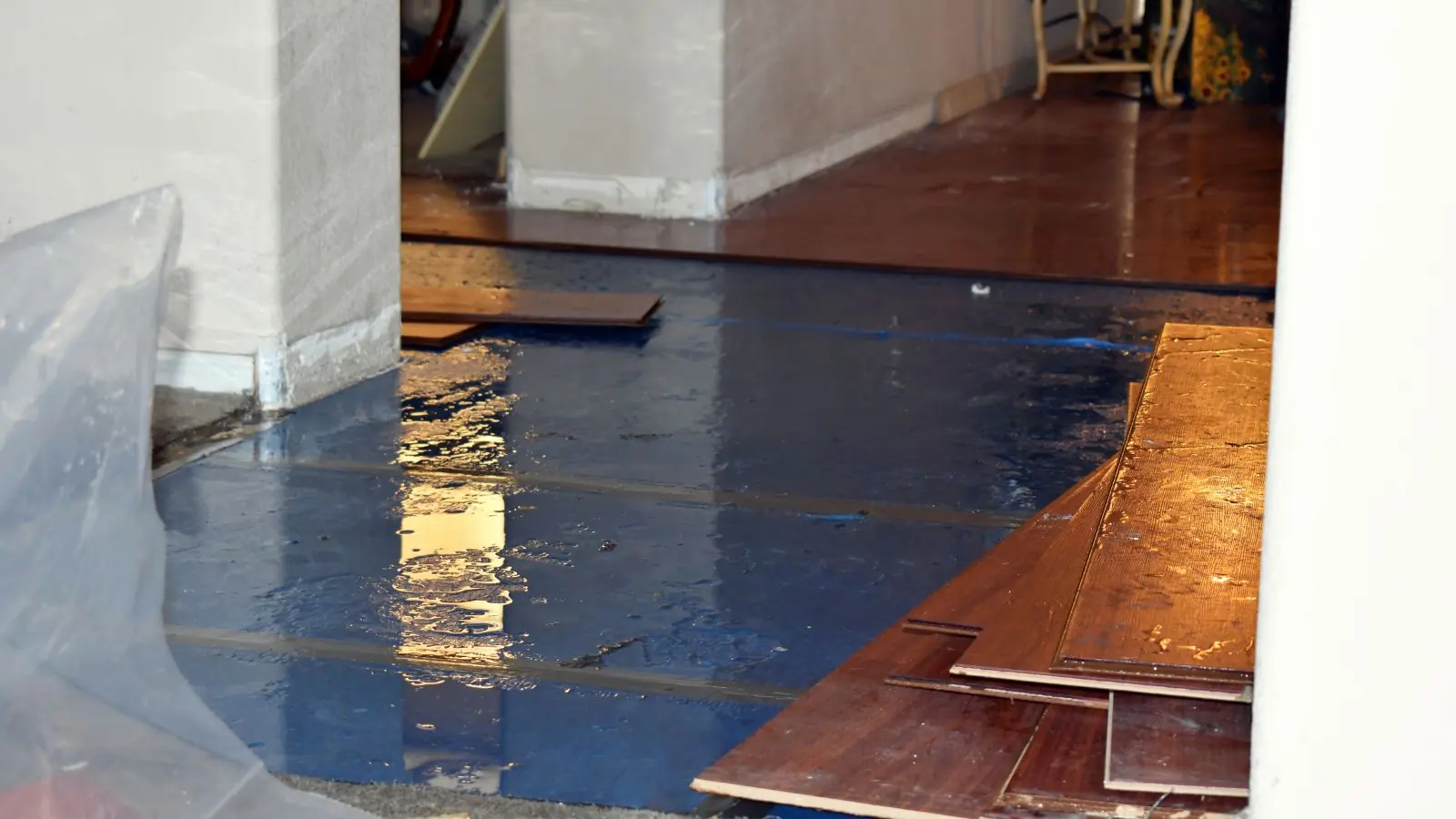
Storm water damage starts when wind-driven rain gets past the roof, a window, flashing or a clogged gutter and soaks the structure from above or the side. The line answers 24/7. While you wait, move people and valuables away from dripping ceilings, set out buckets, shut off power to wet rooms only if you can reach the panel dry, and call the utility or 911 about downed lines or gas.
This is rain entering through the building envelope, not rising water from outside.
Rain is coming through the roof or a window right now
Act on the water inside first and the roof second. Stay off a wet or icy roof, because a fall is a bigger risk than a leak. The line sends licensed and insured crews around the clock, and same-day service is offered where available, including after a nighttime storm.
Roof tarping and exterior repair belong to a roofer, while pulling water out belongs to our water extraction crews, who also serve nearby towns such as Wood Dale.
- Move furniture, rugs and electronics out of the drip zone and cover what cannot move with plastic.
- Set buckets under drips and stay out from under a ceiling that bulges or sags.
- Leave light fixtures and outlets near wet ceilings alone, and shut off the breaker only from a dry spot.
- Photograph the ceiling, walls, floors and the weather outside before anything is cleaned.
- Call a roofer for temporary tarping, then call the line for extraction and drying.
How storm water gets in and where it ends up
Most storm leaks follow a path that is not obvious from the stain. Water enters at one spot and travels along framing, wiring and pipe penetrations before it shows.
| Entry point | Telltale sign | Where water often ends up |
|---|---|---|
| Roof shingles or flashing | Ceiling stain, wet attic insulation | Ceiling drywall, wall cavities, floors below |
| Window frames and sills | Peeling paint, damp trim | Wall bottoms, baseboard, floor edge |
| Gutters and downspouts | Overflow at eaves, wet fascia | Soffits, upper walls, siding seams |
| Chimney and vents | Brown rings around penetrations | Ceiling, attic, nearby rooms |
Two days of rain at O'Hare in April 2013
The National Weather Service recorded 5.55 inches of rain at O'Hare over April 17 to 18, 2013, a record April two-day total for Chicago. April 18 alone brought 3.54 inches. O'Hare sits next to Bensenville, so it shows how much rain the area can take in two days, not that a particular street flooded.
The practical payoff is that roofs, gutters and window seals are tested hard by a few days of heavy rain. Check them before spring storms, and photograph your house now so you have a before record if you ever file a claim.
Water spreading or a smell you cannot place? Talk to dispatch now.
(630) 580-6401Storm water is not flood water
Rain that enters through the roof or walls is usually treated differently from water that rises from creeks or the ground. Surface and rising water belongs on the flood damage restoration page, where contamination and coverage differ. Most policies do not cover floods unless flood coverage was bought separately.
If you are unsure which you have, describe the water to the dispatcher and ask your insurer how your policy treats it. Roof leaks that cause ceiling stains are covered in more detail on ceiling water damage repair.
From temporary protection to a dry structure
After the opening is covered, crews extract standing water and check wet insulation, ceiling drywall and subfloors with moisture meters and a thermal imaging camera. Saturated insulation and sagging ceiling board usually come out, while framing and sheathing are dried with air movers and LGR dehumidifiers.
Drying continues until readings meet the targets in ANSI/IICRC S500, the published standard, and you can ask any company if its crews work to it. See structural drying for how readings are tracked.
Roof, gutter and siding work and the Village permit list
The Village of Bensenville lists roof, gutters and siding work among its residential permits, so repairs after a storm may need one. Call Community and Economic Development at 630-350-3413 to ask whether a permit applies, and book any inspection at least 24 hours ahead. A short call before the roofer starts avoids work being stopped.
Temporary tarping and emergency covering to stop more damage are different from permanent repair, so ask the Village which applies. Keep receipts for emergency work, and do not make permanent repairs before talking to your insurer.
What drives storm water damage cost
Before work begins, the scope and price are put in front of you. Sudden storm damage is often covered by homeowners insurance, while gradual leaks and neglected roofs often are not, so go through your declarations page with your insurer. Photograph damage, report promptly and ask how long you have to file.
Want a number for your own home? Call (630) 580-6401.
- How many rooms and floors the water reached, including the attic.
- Amount of wet insulation, ceiling board and flooring to remove.
- Whether the water is clean rain or mixed with roof debris and sewage.
- Equipment days for drying and the number of monitoring visits.
- Access to attics, tall ceilings and finished walls.
- Time of day and how many homes were hit by the same storm.
Questions about Storm Water Damage
Do you handle storm water damage emergencies at night or on weekends in Bensenville?
Yes. The dispatch line answers 24/7 and sends licensed and insured crews, with same-day response when available. Call during or after a storm, and call the utility or 911 first for downed lines or gas.
Should I call a roofer or a water damage company first?
Do both, in order. A roofer covers the opening so water stops entering, and a water damage crew removes water and dries the structure. Photograph the damage before either starts.
Is storm damage covered by homeowners insurance?
Sudden and accidental damage from a storm is often covered, but gradual leaks and neglected roofs often are not. Flood damage is usually excluded without separate coverage. Check your policy, ask your insurer and keep receipts.
Can I stay in the house with a wet ceiling?
Stay out of any room where the ceiling sags, drips near light fixtures or shows widening stains. A wet ceiling can fall, and water near wiring is an electrical risk. Stay in dry rooms and call.
How soon does mold become a concern after a storm leak?
Mold needs moisture, so wet materials left undried invite it. Quick extraction and drying lower the chance. Testing and removal follow S520, and health questions belong to a physician.
What if the rain came from a creek or rising water?
That is flood damage, which is handled differently and is usually excluded from standard homeowners policies. Check the FEMA flood map for your address, and see our flood page for what applies.
Still unsure which page fits your situation? Dispatch can sort it out in one call.
(630) 580-6401