
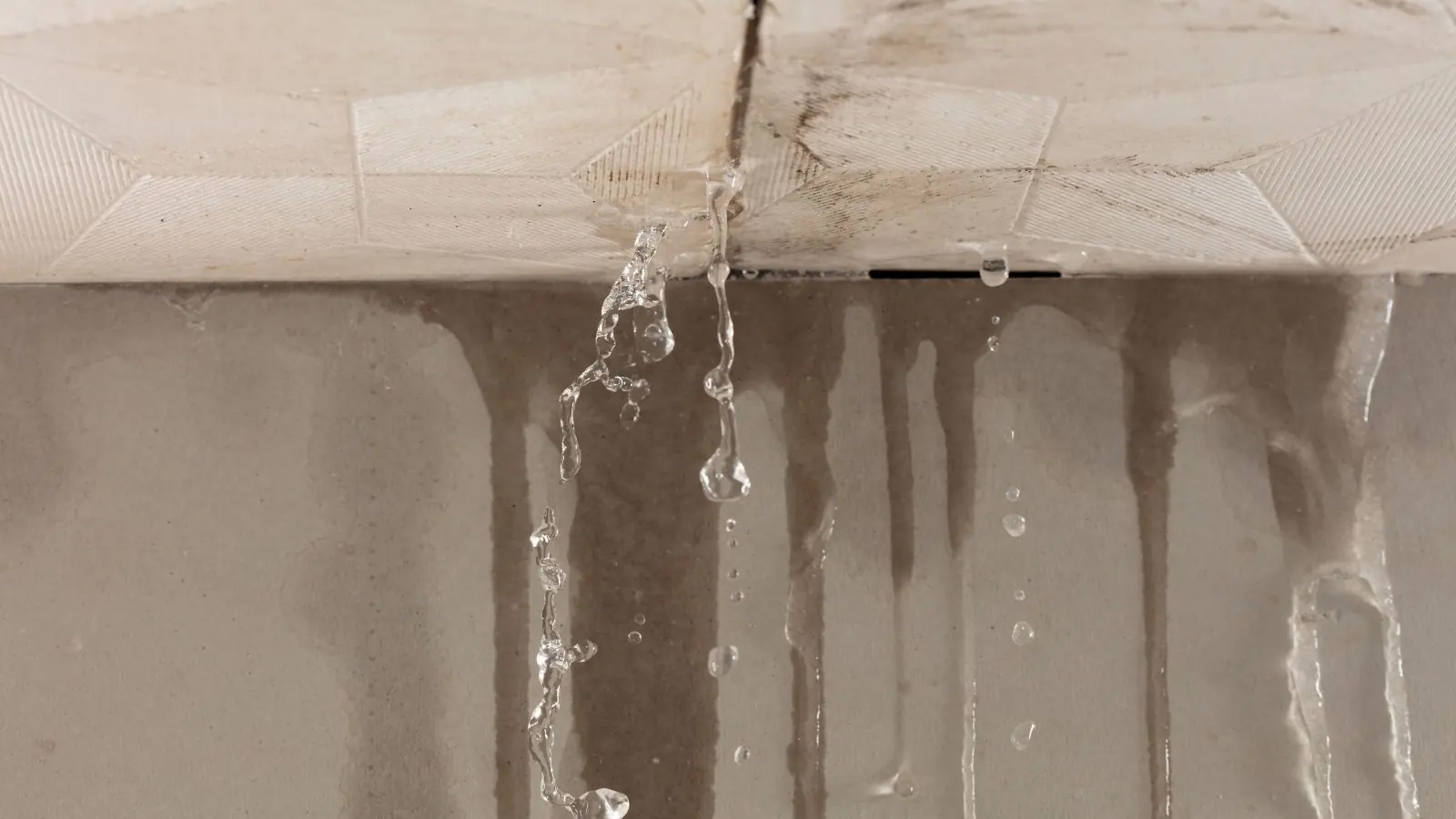
A shower pan leak is water getting past the waterproof layer under a tiled shower floor and soaking whatever sits below it. The damage builds quietly, because the tile on top looks fine while the subfloor, framing and ceiling underneath take on moisture.
That is why most people find shower pan leak water damage by accident, often as a brown stain on the room below. This guide covers how a pan works, what the warning signs look like and what to do before anyone starts tearing out tile.
What the pan actually is
The visible tile is not what keeps water in. Under the mortar bed in a traditional shower sits a pan liner, a sheet of waterproof membrane that is folded up the walls and clamped around the drain. Water passes through grout and tile as a matter of course, runs down the slope of the mortar and leaves through the drain.
If that liner is cut, pinched, poorly seamed or separated at the drain, the water has nowhere to go but down. Other showers use a prefabricated base or a surface-applied membrane, and those have their own weak points at seams and corners.

Why it is a slow leak
A shower pan does not burst. It weeps. Each shower sends a small amount of water through a flaw, and between showers the materials partly dry. The leak can run for months before anything shows, which is why a pan leak behaves differently from a snapped supply line.
Water also travels. It can follow a joist, run along the top of a wall plate or soak into insulation before it reaches a visible surface. The spot where you see the stain is often not directly under the leak.
Signs to look for
No single sign proves a pan leak. Together they build a case. Check both the bathroom and the space under it.
- A yellow or brown stain on the ceiling below the shower, especially one that grows after use.
- A soft or spongy spot in the floor just outside the shower curb.
- Grout that stays dark or never seems to dry between showers.
- Tile that sounds hollow, loosens or cracks along the edge.
- A musty smell in the bathroom or the closet next to it.
- Paint bubbling or drywall softening on the wall that backs the shower.
Pan liner failure versus tile and grout
Not every wet shower is a failed pan. Cracked grout or a worn caulk line can let water behind the tile without the liner being at fault. The difference matters because the fix is very different. Regrouting and recaulking is an afternoon, while a failed liner usually means removing the shower floor.
The table sets out how the two problems tend to show up.
| Clue | Points to grout or caulk | Points to the pan liner |
|---|---|---|
| Where moisture shows | Near corners and wall joints | Under the shower floor or the room below |
| Timing | Appears after heavy use of the walls | Appears even when only the floor gets wet |
| Ceiling stain below | Uncommon | Common and slowly growing |
| Flood test result | Level holds at the drain | Water level drops with the drain plugged |
| Usual repair scope | Reseal and regrout | Rebuild the pan, then retile |
Not sure which way to go? Talk it through with dispatch.
(630) 580-6401A simple check before you call anyone
A moisture meter gives numbers where fingertips give guesses, and a thermal camera can show a cooler wet patch on a ceiling. Those tools tell you where water is, not how long it has been there.
- Look at the ceiling or wall below the shower and photograph any stain with a date.
- Press gently on the floor outside the curb with a flat hand. Soft or springy means water has reached the subfloor.
- Run the shower for ten minutes and check the room below for new drips.
- If a plumber or tile installer does a flood test, expect the drain to be plugged and the pan filled to just below the curb, then watched over a period of hours.
- Stop using the shower if you find damp framing or a spongy floor.
Bensenville bathrooms and aging shower pans
With about half of Bensenville homes occupied by renters, a shower leak often means a unit upstairs and a ceiling downstairs belonging to different households. Census QuickFacts counts 6,834 households in the village, and the rental share is large enough that a stain on your ceiling may come from a neighbor's bathroom. Photograph it and tell the building manager in writing so the source is traced before the stain spreads.
For tile and pan repair, the Village's Community and Economic Development office, at 630-350-3413, is the place to ask whether a permit applies to your project. The Village lists water heater replacement and remodels among permit items, but it does not publish a rule for every repair, so ask before you commit to a contractor's schedule.
Dealing with the damage underneath
Once the leak is confirmed, the pan problem and the water damage are two jobs. One is plumbing and tile. The other is drying what got wet. A ceiling that has been stained and softened needs to be opened, dried and repaired, and the process is described on the ceiling water damage repair page.
If the wall behind the shower or the wall next to it has absorbed water, the drywall may need cutting back to dry framing. That is covered in wall and drywall water damage repair. Neighbors in Franklin Park and Stone Park see the same pattern in older bathrooms.
Mold and the longer view
Where a pan has leaked for months, the cavity below often stays damp. Mold needs moisture, so the first step is always finding and stopping the water. Cleaning a surface without fixing the leak only buys a short pause.
If you see dark growth, treat it as a sign of a moisture problem and have the cause fixed. Questions about health belong with a physician, not a website.
Questions about this topic
How do I know if my shower pan is leaking?
Look for a stain on the ceiling below, a soft floor at the curb, grout that never dries and hollow-sounding tile. A flood test by a plumber or tile installer is the usual confirmation.
How long can a shower pan leak before it causes damage?
There is no fixed timeline. A small flaw can leak for months before a stain appears, since the water spreads through insulation and framing first. The longer it runs, the more material has to be dried or replaced.
Can I just regrout to stop the leak?
Only if the problem is in the grout. If the liner under the mortar is cut or separated, regrouting hides the symptom while the water keeps going down. Ask for a flood test before deciding.
Is a shower pan leak covered by homeowners insurance?
Often not, because slow leaks over time are a common exclusion. A sudden event can be treated differently. Check your policy or ask your insurer, and take dated photos either way.
I rent in Bensenville and the ceiling below my shower is stained. Who do I tell?
Tell your landlord or property manager in writing, with dated photos of the stain. With roughly half of village homes rented, they handle these reports regularly.
Keep a copy of the message, and photograph your belongings in case they were affected.
Still unsure which page fits your situation? Dispatch can sort it out in one call.
(630) 580-6401