
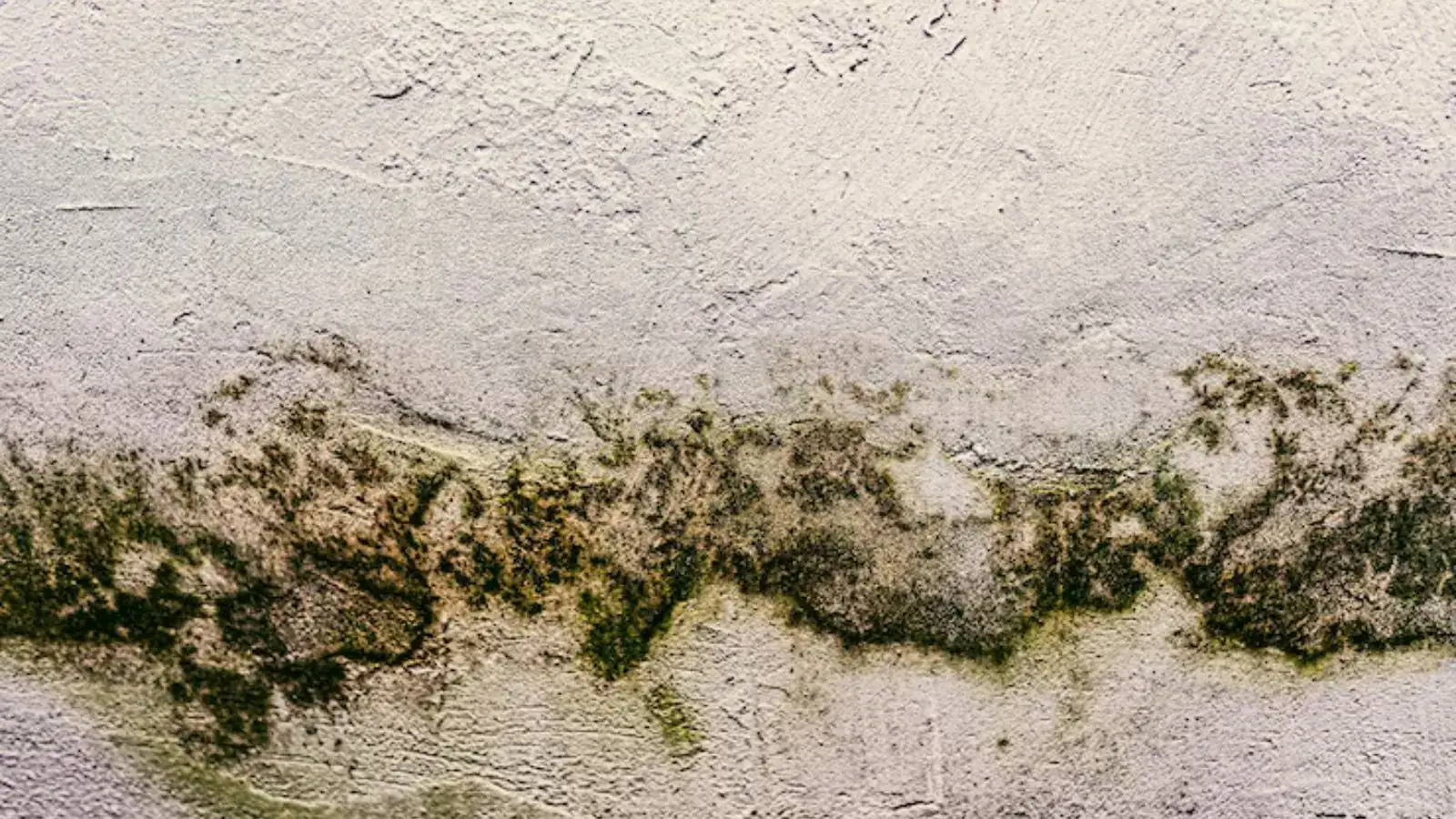
People use mold and mildew almost interchangeably, and in everyday life that is fine. Mildew usually describes a flat, powdery or downy growth on a surface, while mold is the wider word for fungal growth that can sit on or inside materials. This guide covers how they tend to look, where they show up in a Bensenville house or apartment, and why the label matters less than the wet spot underneath.
What each word usually means
Mildew is the term most people use for the white, gray or yellowish film that appears on a shower curtain, a window sill or a damp piece of leather. It tends to sit on the top of a surface and often wipes away.
Mold covers a bigger family. It can be fuzzy, slimy or speckled, in black, green, blue or white, and it can work into drywall paper, wood and insulation. Photos online can mislead, since color alone does not identify what you have.
How they tend to look and feel
Use appearance as a rough guide, not a verdict. The table lays out common patterns.
| Trait | Often called mildew | Often called mold |
|---|---|---|
| Texture | Flat, powdery or downy film | Fuzzy, raised, slimy or clustered spots |
| Color | White, gray, pale yellow | Black, green, blue, brown, white |
| Where it sits | On top of a surface | On the surface or into the material |
| Wipes off? | Often yes, though it may return | Stains often remain, material may be soft |
| Typical places | Showers, windowsills, fabrics | Drywall, framing, carpet pad, basement walls |
Surfaces that give you clues
Where the growth sits can say more than its color. Tile grout, a shower curtain and a painted bathroom ceiling with good ventilation are classic spots for a surface film. Those places get splashed and then dry out slowly.
A different set of surfaces calls for more caution. Spots on drywall paper, on the underside of carpet, on the bottom plate of a wall or inside a cabinet back panel suggest moisture that is entering the material. If the surface feels soft, bulges or has a stain that returns after cleaning, treat it as more than cosmetic.
Why the moisture matters more than the name
Both need water to grow. Call a patch mold or mildew, and it will keep appearing wherever humidity stays high or a surface stays wet. Scrubbing without correcting the source is repainting a leaky roof.
Think in terms of three questions. Is the area wet from a leak, from condensation or from groundwater? How large is the affected area? Is material soft or discolored beyond the surface? Those answers set the plan far better than a name does.
Not sure which way to go? Talk it through with dispatch.
(630) 580-6401Mold and mildew in Bensenville homes
The Village of Bensenville states that it cannot prevent flooding and lists three flood sources, Willow Creek, Silver Creek and Addison Creek, each with its own floodplain. If your damp wall is in a basement, ask the Village Engineering Division at (630) 350-3435 whether your property is in a floodplain, and check the FEMA flood map for your address.
A recurring wet basement wall is a moisture question first. The answer decides if you face simple drying or full basement water damage cleanup.
CMAP's housing toolkit puts about half of Bensenville homes in the rental column. If you rent and see growth on a wall, tell your landlord in writing, attach a dated photo and keep a copy. Households in Stone Park and Addison face the same reporting step.
Everyday habits that keep surfaces dry
Most surface growth in a Bensenville home traces back to ordinary humidity. A bathroom fan that stops the moment the shower does, a dryer vent that leaks into the laundry room and a kitchen without a range hood all add water vapor to the air. Window sills collect condensation on cold mornings, and the damp paint or caulk there becomes a food source.
Small changes help. Run the bath fan for a good while after showers, wipe down tile and glass, leave space between furniture and exterior walls, and open blinds on cold days so windows can warm up. In a basement, keep boxes off the floor and off the walls, and watch for any wet patch after heavy rain.
- Wipe shower walls and the curtain after use.
- Keep storage boxes a few inches off basement walls and floors.
- Fix dripping faucets and sweating pipes rather than hiding them.
- Watch the same wall after rain to see whether the dampness is weather-linked.
Small patch or larger problem
A small patch on a hard, non-porous surface that is dry again within a day is usually a housekeeping job. Ventilate, wipe, dry and watch whether it returns. Keep the household bathroom fan running during and after showers, and consider whether furniture is pressed against a cold exterior wall.
Larger or recurring growth is different. Anything on porous materials, anything that spreads after cleaning or anything with a musty odor that persists points to moisture inside the assembly. At that point mold remediation following S520 is a conversation to have, not a bleach bottle project.
Do you need a lab test to name it
Usually, a lab name does not change the first steps. The visible evidence, the moisture readings and the location of the water are what drive a plan. Sampling can be useful in specific cases, for example documentation for a sale, a dispute with a landlord or a question about where airborne spores are concentrated.
If you decide to test, choose a party that does not also sell the cleanup. Questions about whether any growth is affecting someone's health are for a physician, not for a contractor or a web article.
Questions about this topic
Is mildew less serious than mold?
The word mildew is often used for surface growth on a bathroom or window, which tends to be simpler to deal with. It still tells you moisture is lingering.
What matters is how far the growth extends, what material it is on and whether the water source is fixed.
Can I just wipe it off with bleach?
On a hard surface in a small spot, many people clean with detergent and dry the area well. On drywall, wood or carpet, surface cleaning rarely reaches growth inside the material.
Never mix cleaning products, and if the area is large or keeps returning, have it assessed.
Why does black growth keep returning on my bathroom ceiling?
A ceiling that stays damp after showers will grow it again. Check fan size, duct routing to the outside, and whether the fan runs long enough after you finish.
If the ceiling paint is bubbling or stained, there may be a leak above it as well.
I rent in Bensenville and found growth on a wall. Who handles it?
Start by telling the landlord in writing with dated photos. About half of homes in the village are rentals, so landlords and tenants both deal with this regularly.
Your lease and Illinois law set who is responsible, so ask a tenant advocate or attorney if the landlord does not respond.
When should I stop treating it myself?
Stop if the growth is on drywall or insulation, covers a large area, returns after cleaning, or sits in a space that was recently flooded.
At that point, ask a restoration company how it would contain the area and what standard it follows.
Still unsure which page fits your situation? Dispatch can sort it out in one call.
(630) 580-6401