
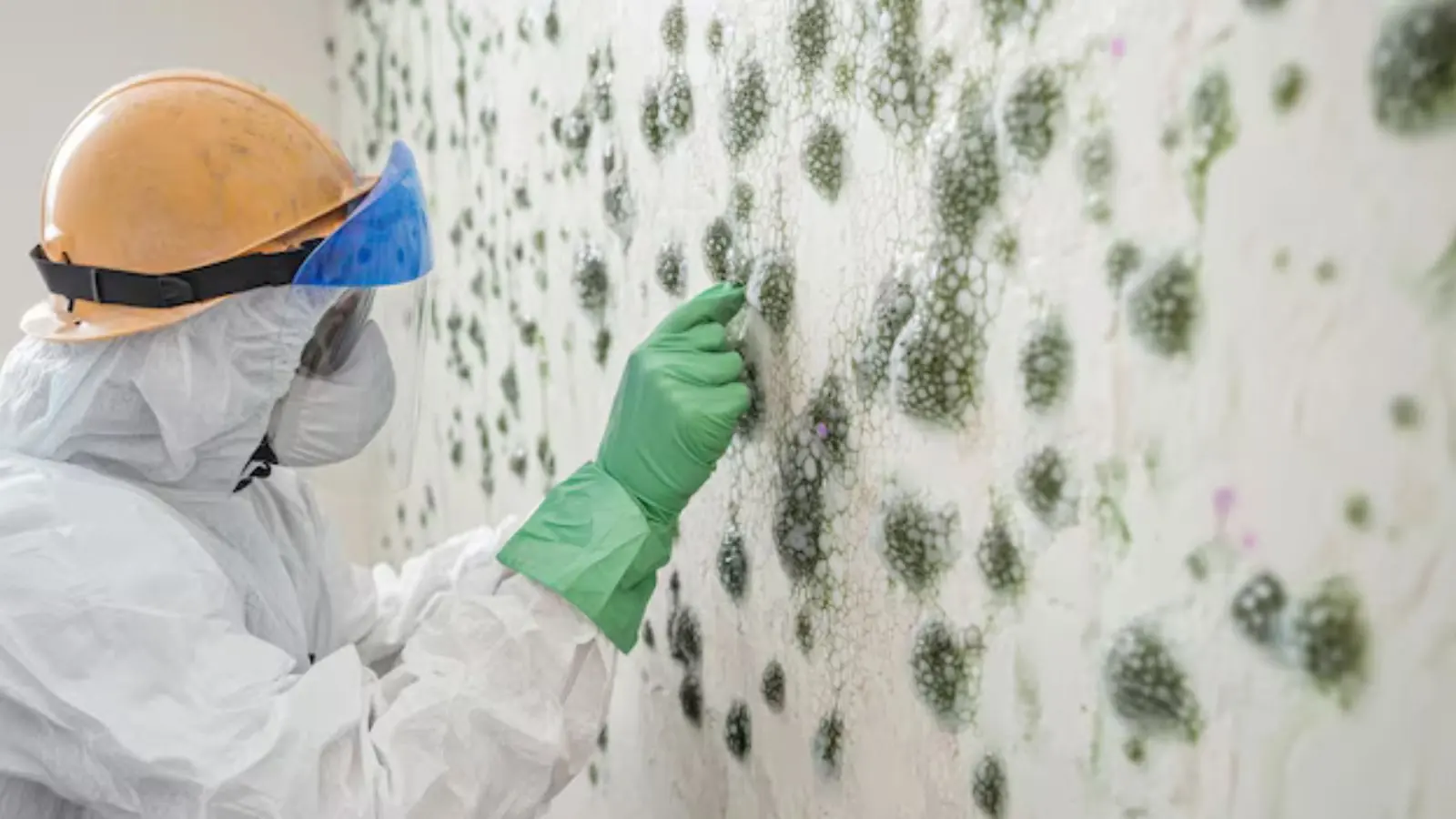
Mold remediation is the process of containing, removing, and cleaning mold-affected materials, and fixing the moisture that let it grow. Mold needs moisture to grow, so the work starts with the source of the water, not just the visible spots.
Testing and remediation follow the ANSI/IICRC S520 standard, and you can ask any company whether its crews work to it. Questions about how mold affects a person belong to a physician. This page explains how a crew finds the moisture, sets containment, and decides what stays and what goes.
Musty smell, dark spots, or a damp wall?
If you have noticed a musty smell, dark spots on a wall or ceiling, or a wall that stays damp, you may be looking at a mold problem. The next step is an inspection for moisture, and if mold is found, mold remediation.
Only an inspection or testing can say what a dark spot is, because dirt, staining, and mold can look alike. That is why the first call is about the moisture source and the area, not a guess.
Mold needs moisture, so the source comes first
Cleaning mold off a surface does not fix a leak, a damp crawl space, or a roof that lets water in. Until the moisture is dealt with, the conditions that support growth are still there. For that reason, any serious plan has a water-source step before a cleaning step.
Common sources include a plumbing leak inside a wall, a damp crawl space, a wet basement, and drying that was started too late after a loss. Drying the structure properly, as described on the structural drying and dehumidification page, is often the first step.
A plumber, roofer, or drying crew may need to act before remediation can finish. Ask who owns each step so the order of work is clear, and so a fixed leak is not wetted again by the next trade.
How the S520 process runs
ANSI/IICRC S520 is the industry standard for mold remediation. It covers assessment, containment, removal, cleaning, and verification, and it is the reference homeowners can name when they ask a company about its method.
- Assess the area, find the moisture source, and read moisture levels with a meter.
- Set containment with plastic sheeting and a negative air machine so spores do not spread to other rooms.
- Remove affected porous material such as drywall, insulation, and carpet pad, bagging it before it leaves the work area.
- Clean framing and hard surfaces with HEPA vacuums and damp wiping.
- Dry the structure, then verify the area before rebuilding.
Not sure which way to go? Talk it through with dispatch.
(630) 580-6401What gets cleaned and what gets thrown out
Porous materials soak up moisture and are harder to clean, so they are often removed. Non-porous materials can usually be cleaned and kept.
| Material | Type | Typical approach |
|---|---|---|
| Drywall and ceiling tile | Porous | Removed and replaced |
| Carpet pad and insulation | Porous | Removed and discarded |
| Wood framing | Semi-porous | Cleaned and dried, sometimes sanded |
| Concrete and tile | Non-porous | Cleaned and dried |
| Glass, metal, and hard plastic | Non-porous | Cleaned and kept |
What affects the cost of mold remediation
Price depends on the area affected and the amount of material that must come out. The main factors are listed below, and a crew can name a real figure only after an inspection.
Insurance for mold depends on the cause and the policy. Sudden and accidental water damage is often covered, while gradual leaks and neglect often are not. Put the coverage question to your insurer about mold language. Call (630) 580-6401 and describe what you are seeing.
- Size of the area and the number of rooms affected.
- Amount of porous material that has to be removed.
- Containment setup, including negative air machines and sealed barriers.
- Whether the moisture source also needs repair or drying.
- Rebuild work after removal, such as new drywall, paint, and trim.
Illinois mold registration and what to ask a company
Illinois passed the Mold Remediation Registration Act, Public Act 103-0893. The Illinois Department of Public Health says remediation professionals are not required to register until its rules are adopted, and proposed rules were published in the Illinois Register on October 17, 2025. Check the IDPH mold remediation registration page for the current status before you hire anyone.
Because registration may not be required yet, the questions you ask matter more. Ask whether crews work to ANSI/IICRC S520, how they contain the area, and who verifies the work. In a Bensenville home, ask also how the moisture source will be found, since that is what decides whether the work lasts.
After removal: rebuilding and watching for moisture
Once the area is cleared, new drywall, insulation, and trim can go in. Cleaning does not fix moisture by itself, so keep humidity in check, repair leaks quickly, and run a dehumidifier in damp spaces. Walls that were opened can be closed up after the framing reads dry, which is covered on the wall and drywall water damage page.
If you live near Schiller Park or elsewhere around Bensenville, the same rules apply. Check basements and crawl spaces after heavy rain, and call about any new musty smell early.
Questions about Mold Remediation
I smell something musty but cannot see anything. Do I need mold remediation?
A musty smell can point to moisture hidden in a wall, floor, or crawl space. An inspection with a moisture meter can find it.
Remediation is only needed if mold is actually found.
What are the dark spots on my wall or ceiling?
Dirt, staining, and mold can look alike, so only an inspection or testing can say. Do not scrub or paint over the spots before it is checked.
Look for the moisture source above or behind them.
Does a damp wall mean there is mold?
Not always, but damp materials give mold the moisture it needs. Dry the wall quickly and find the leak.
A moisture reading shows how wet the wall is.
Can bleach or paint fix mold?
Surface cleaning does not fix the moisture that allowed growth, and paint only covers the spot. Porous materials often need to be removed.
S520 describes the proper process.
Is mold remediation licensed in Illinois?
Illinois passed the Mold Remediation Registration Act, Public Act 103-0893. IDPH says registration is not required until its rules are adopted, and proposed rules were published October 17, 2025.
For where the registration rules stand now, look at the IDPH mold remediation registration page.
What about my family's health and mold?
Health questions belong to a physician, and this page cannot diagnose anything. A doctor can speak to your situation.
Remediation deals with the building, not with medical concerns.
Still unsure which page fits your situation? Dispatch can sort it out in one call.
(630) 580-6401