
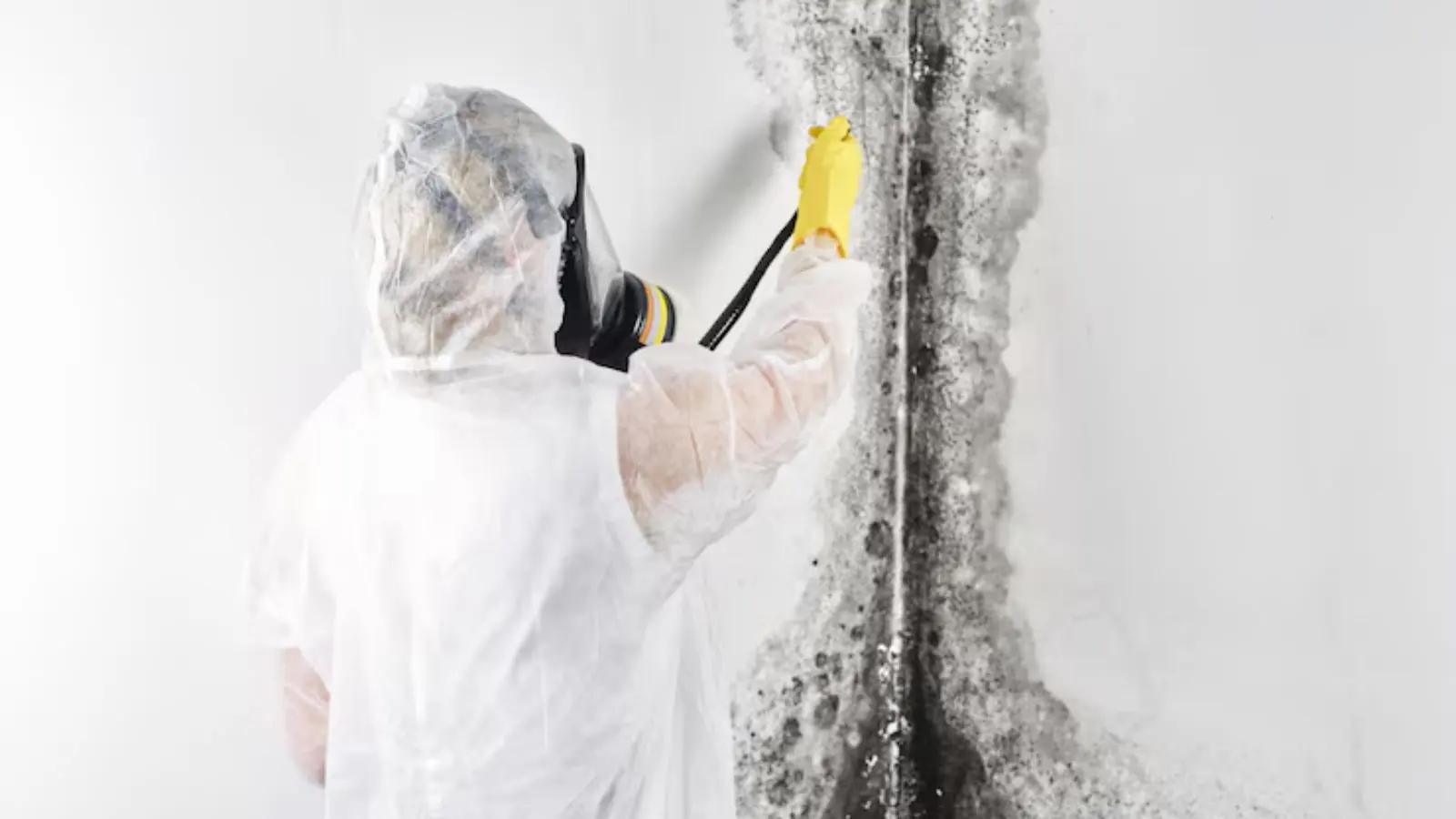
Mold clearance testing is a verification step done after mold remediation to document that the work area meets the target set in the remediation plan. If you are selling a house in Bensenville and mold turned up in the basement, a bathroom wall or an attic, that document can keep a contract from stalling. Here is what clearance means, how it differs from the first test, and who should be the one holding the sampling kit.
Initial test versus clearance test
These two tests answer different questions, and mixing them up is the most common source of confusion in a sale. An initial assessment asks what is here and where it came from. A clearance asks whether the cleanup finished the job it was supposed to do.
The table below shows how the two usually differ.
| Point | Initial assessment | Clearance (post-remediation verification) |
|---|---|---|
| When it happens | Before any cleanup starts | After remediation and drying are finished |
| Main question | Where is the growth and what moisture feeds it | Did the work meet the written plan |
| Typical parts | Visual inspection, moisture readings, sometimes samples | Visual inspection, moisture readings, sometimes air or surface samples |
| Output | A scope for the remediation plan | A report you can hand to a buyer or lender |
| Who should do it | An independent assessor or the plan writer | An independent party, separate from the remediation company |
Who should do the testing
As general good practice, the party that verifies the cleanup should not be the party that performed it. Think of it like a home inspection after a roof replacement. The person who wrote the plan or an independent assessor checks the result, and the contractor does not grade its own work.
Ask any company that offers both services how it separates them. A buyer's agent or an attorney reviewing the file will usually want to see that separation, so build it in before the work starts.
What a clearance report usually contains
Reports vary, but a useful one reads like a short file of facts rather than a certificate of perfection. A buyer reads it to see what was found, what was done and what the conditions were at the end.
- A description of the affected area and the moisture source that was corrected.
- The remediation plan or protocol the work followed, including reference to S520.
- Moisture readings from the affected materials at the time of the check.
- Visual findings on surfaces, framing and any areas that were removed.
- Any air or surface sampling results and the lab that processed them.
- The date, the person who performed the check and how to reach them.
Why buyers and lenders ask for it
A buyer who learns of past mold in an inspection report will often ask for proof that it was dealt with. Lenders and title or inspection contingencies can add the same request, and their requirements differ from deal to deal. Your agent or attorney can tell you what the contract expects.
A clearance document also helps you disclose accurately. It lets you say what happened, what was done and when, rather than leaving the buyer to guess. Nothing in it should be read as a statement about anyone's health, and questions of that kind belong with a physician.
Not sure which way to go? Talk it through with dispatch.
(630) 580-6401Bensenville home sales and mold paperwork
The Illinois Department of Public Health notes that a Mold Remediation Registration Act, Public Act 103-0893, exists, but remediation professionals are not required to register until its rules are adopted, with proposed rules published in the Illinois Register on October 17, 2025. For a seller, that means a registration number alone does not prove much. Check the IDPH mold remediation registration page for the current status before you rely on any claim, and ask the company which standard it follows.
Census QuickFacts reports a median owner-occupied home value of 259,300 dollars for Bensenville for 2019 to 2023, so a stalled sale carries real money. Tell your agent early if mold has been found, and if you are buying in Franklin Park or Schiller Park the same paperwork logic applies.
The order of work that makes clearance pass-ready
Clearance is only meaningful when the cause was fixed first. Mold needs moisture, so a plan that skips the leak or the damp basement wall is testing a problem that will return to the same state. Remediation under S520 contains the area, removes affected material and cleans the surrounding surfaces, and it relies on materials being dry before anyone closes a wall.
That makes drying the quiet hero of the process. Confirm that structural drying and dehumidification is documented with moisture readings before the work area is rebuilt. Then the work itself falls under mold remediation with a written scope.
- Stop the water source and record what it was.
- Have an independent party write or review the remediation scope.
- Complete the removal and cleaning, then dry the materials.
- Schedule the clearance check with the independent party.
- Hand the report to your agent for the file.
What clearance does not do
A clearance report is a snapshot. It records moisture readings, what the assessor saw and any sample results on one day, and it does not predict what happens after a new leak. It also does not diagnose anyone's health or replace a home inspection that covers the roof, furnace and plumbing.
Samples, when they are taken, are compared against the plan's target and often against an outdoor sample taken the same day. Ask the independent party to explain in plain words what a borderline result would trigger, such as more cleaning, more drying or a second look at the moisture source. A report that explains its own limits is usually more believable to a buyer than one that sounds perfect.
Questions to settle before you list
Sellers get into trouble when they treat clearance as a formality. Ask your agent whether the contract names a testing standard, who pays, and what happens if a result is borderline. Then ask the testing party what they will do if the check fails, since the plan should include a second pass.
Keep every invoice, photo and message in one folder. A clean paper trail beats a stack of verbal assurances at closing.
Questions about this topic
What is the difference between mold testing and mold clearance?
Testing before work looks for where growth is and why. Clearance happens after remediation and checks whether the work met the plan.
Buyers usually care most about the clearance document because it covers what was done.
Can the remediation company also perform the clearance test?
It can, but the better practice is an independent party. A separate verifier has no stake in the result, and buyers and lenders tend to trust a separate report more.
Ask how any company you hire handles that separation.
Does a passing clearance mean mold cannot return?
No. It documents conditions on the day of the check. Mold needs moisture, so the long-term answer is keeping the area dry and fixing the water source.
A report should never be read as a promise about the future.
Is mold remediation registration required in Illinois today?
According to IDPH, the Mold Remediation Registration Act exists but professionals are not required to register until its rules are adopted. Proposed rules were published October 17, 2025.
The IDPH mold remediation registration page shows where that rulemaking stands today.
Do I have to disclose past mold when selling?
Disclosure duties depend on Illinois law and your contract, so ask your attorney or agent. Having a clearance report makes accurate disclosure easier.
This post is general information and not legal advice.
Still unsure which page fits your situation? Dispatch can sort it out in one call.
(630) 580-6401