
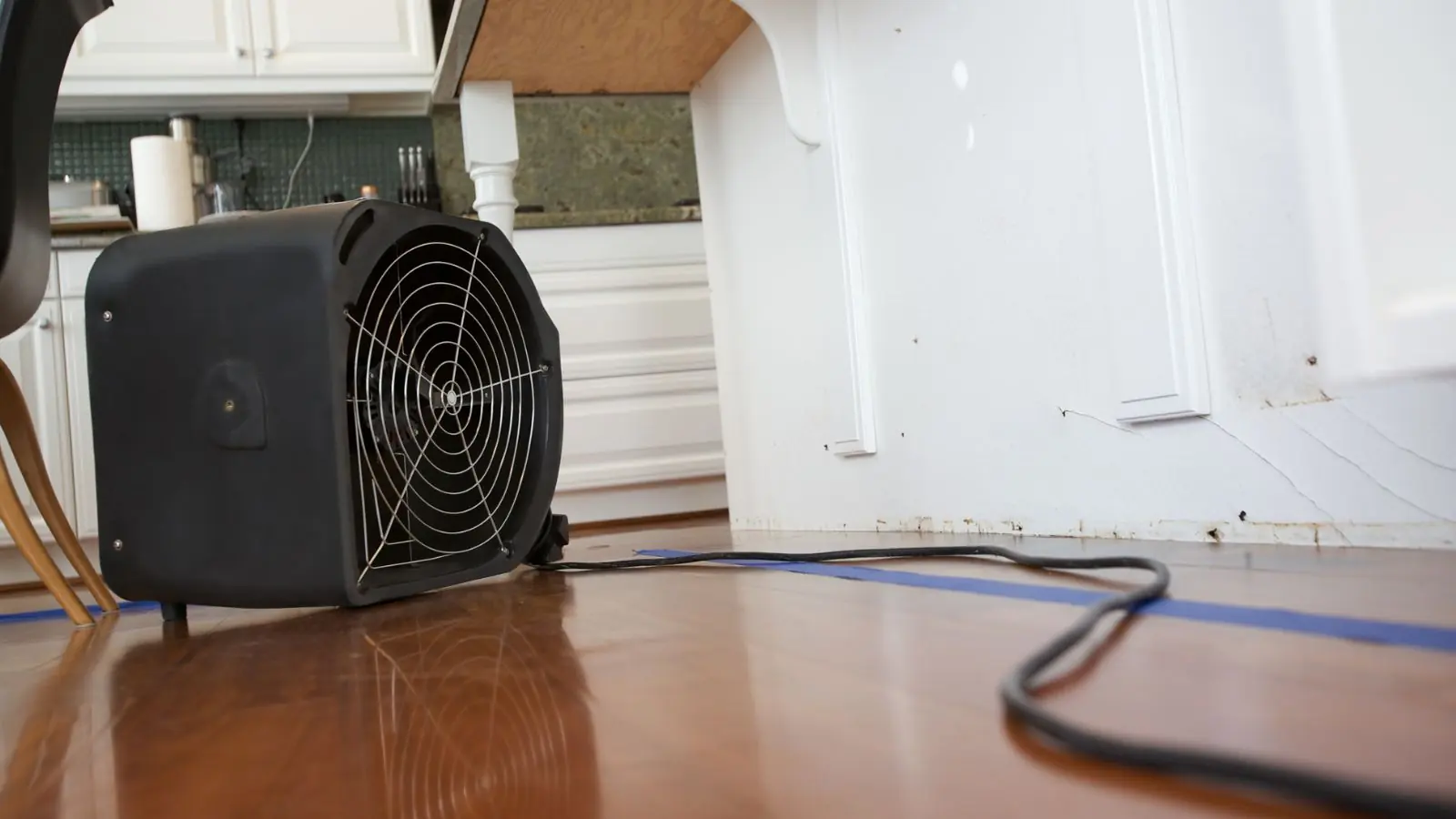
Kitchen water damage is moisture that has soaked cabinet boxes, toe kicks, flooring and the subfloor beneath them. The kitchen hides more water than most rooms, because cabinets sit on the floor and trap it behind solid panels.
A countertop that looks fine can sit on a base cabinet full of wet particleboard, so checking behind and under the cabinets is the first step.
Under-sink leaks and the cabinet base
The sink base is where most kitchen leaks begin. A slow drip from a supply line, drain trap or garbage disposal soaks the cabinet floor for weeks, and the first sign is a swollen shelf or a smell when you open the door.
Empty the cabinet, take photos, and look for rust on the supply line shut-off valves and staining on the back wall. A slow leak is different from a sudden failure, and insurers often treat gradual damage differently, so confirm coverage with your insurer.
Cabinet materials and how they react
What the cabinet is made of drives the repair decision. Particleboard and MDF boxes swell and rarely return to shape, while plywood and solid wood tolerate more moisture and can often be dried. Laminate and paint finishes can hide the damage until edges lift.
| Cabinet part | Reaction to water | Usual outcome |
|---|---|---|
| Particleboard or MDF box | Swells, crumbles at edges | Often replaced |
| Plywood box | Takes on water, may delaminate | Dried if caught early |
| Solid wood doors and frames | Cups or stains | Dried and refinished |
| Laminate countertop edge | Lifts at seams | Often replaced if swollen |
Toe kicks and the cavity behind them
The toe kick is the thin board at the base of the cabinets. Water reaches it first and sits behind it, where nobody looks. Removing a section lets a crew check the cavity with a moisture meter and point an air mover into it.
Look for a toe kick that has bowed outward, a lifted floor edge or a musty smell near the floor line. Those signs point to moisture behind the panel, not just on top of it.
The subfloor under the cabinets
Cabinets often sit on top of subfloor and sometimes on flooring that was installed around them. Water that gets under that line is hard to dry without moving the cabinets. A thermal imaging camera finds cool, wet patches, and a meter confirms them.
If the subfloor stays wet, framing and boards can swell, and the floor can feel soft near the sink or dishwasher. Drying follows the process on our structural drying page, with air movers and LGR dehumidifiers, and ANSI/IICRC S500 is the published standard for it. You can ask any company whether its crews work to it.
Not sure which way to go? Talk it through with dispatch.
(630) 580-6401When the appliance is the problem
A dishwasher hose, ice-maker line or refrigerator supply can fail and flood the same cabinets and floor. If the appliance caused the failure, the source is covered on appliance leak water damage. This page is about the cabinet and room damage that follows, whatever the source.
Shut off the water to the appliance, unplug it only from a dry spot, and photograph the hose and the area before anything is moved.
Dry it, repair it or replace it
Most kitchens end up with a mix of all three. The decision follows the material, how long it was wet and whether the water was clean.
- Dry in place when cabinet boxes are plywood or solid wood, the water was clean and readings are close to dry.
- Repair when only finishes, trim or a toe kick are damaged and the subfloor is sound.
- Replace swollen particleboard boxes, delaminated panels and flooring that has buckled.
- Open the floor if the subfloor is soft or if readings stay high after several days.
- Photograph wet parts before they are removed, and keep samples if you plan to file a claim.
What drives the cost of kitchen water damage
The the crew lays out scope and price first. Damage that is sudden and accidental is often covered, gradual leaks and neglect often are not, and you should go through your declarations page with your insurer. Keep receipts and photos, and do not make permanent repairs before talking to them.
Ready to scope it? Call (630) 580-6401.
- Cabinet material and how many boxes are wet.
- Flooring type and whether it must come up for drying.
- Subfloor condition and access under the cabinets.
- Equipment days for air movers and dehumidifiers.
- Whether plumbing or appliance work is also needed.
Kitchens in Bensenville rentals and owner homes
Roughly half of Bensenville homes are rentals, so a kitchen leak often involves a tenant and a landlord. Tell the landlord in writing, keep photos, and do not remove cabinets until both sides have documented the damage. That avoids disputes about what was there.
The Village lists additions and remodels among residential permits, so ask Community and Economic Development at 630-350-3413 whether a permit applies to a kitchen rebuild. Related floor and wall repairs are on the hardwood floor water damage repair and wall and drywall water damage repair pages. We serve Addison and other nearby towns too.
Questions about Kitchen Water Damage
How do I know if water got behind my kitchen cabinets?
Look for swollen toe kicks, a lifted floor edge, a musty smell or stains inside the sink base. A moisture meter and thermal camera confirm it without tearing everything out.
Can wet cabinets be dried or do they have to be replaced?
Plywood and solid wood cabinets can often be dried if the water was clean and caught early. Particleboard and MDF boxes that swell usually need replacing. The crew checks material and readings before deciding.
Do I have to pull up the kitchen floor?
Not always. If water reached the subfloor, flooring may need to come up or be dried through the toe kick or holes. Moisture readings decide, and the crew will explain why.
Is a dishwasher leak a kitchen problem or an appliance problem?
Both. The failed hose or valve is the appliance side, and the wet cabinets and subfloor are the kitchen side. We handle cleanup and drying, and a plumber or appliance repair fixes the part.
Will insurance cover kitchen water damage?
Sudden and accidental leaks are often covered, but slow leaks and neglected plumbing often are not. Check your policy, ask your insurer, and photograph everything before cleanup.
Could mold grow behind my cabinets?
Mold needs moisture, and enclosed cabinet cavities hold it. Prompt drying lowers the chance. Testing and remediation follow S520, and health questions go to a physician.
Still unsure which page fits your situation? Dispatch can sort it out in one call.
(630) 580-6401