
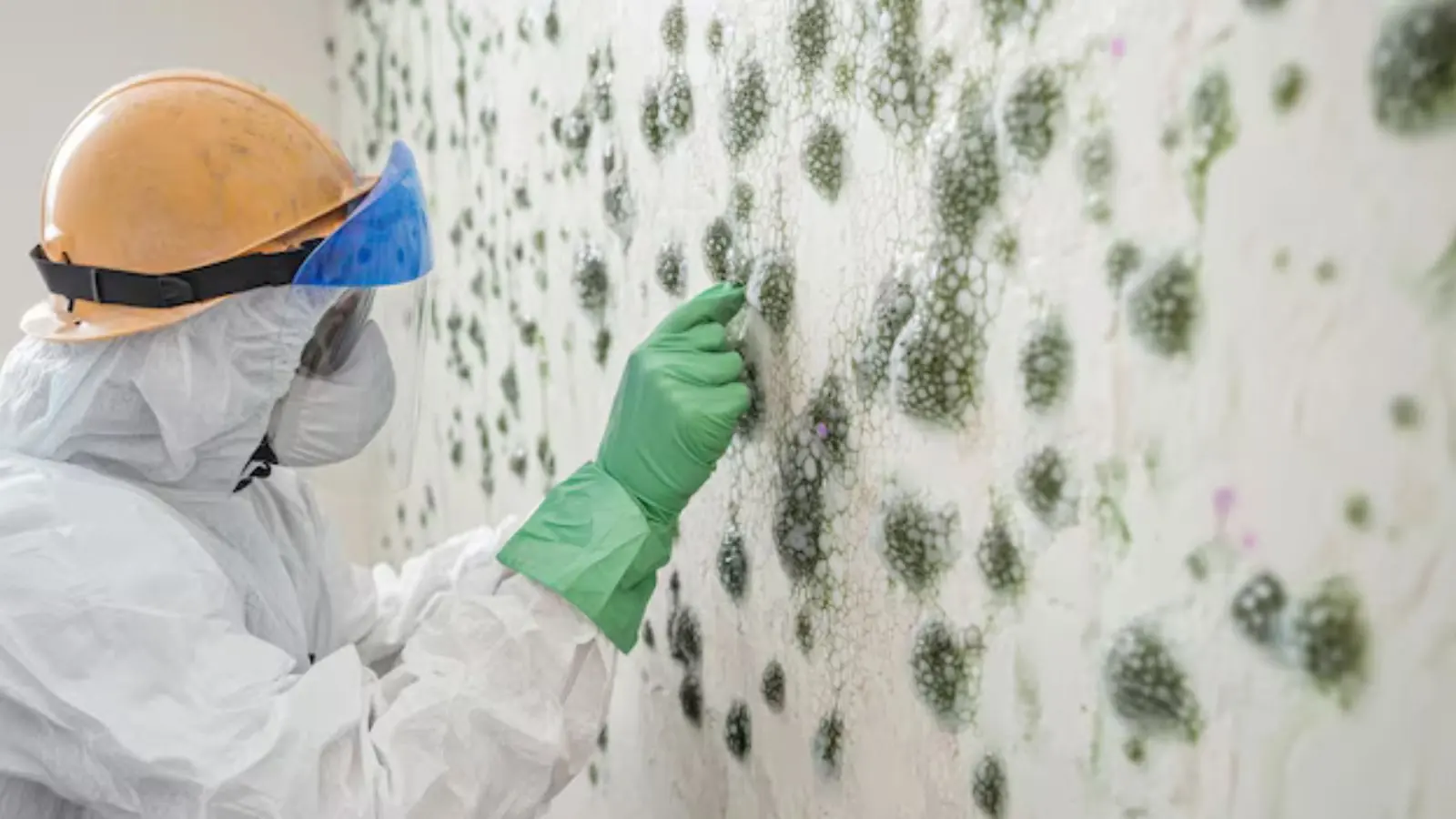
Bathrooms grow mold because they are warm, damp and often short on airflow. If you want to know how to get rid of mold in a bathroom, the answer has two halves: clean the surface growth, and remove the moisture feeding it.
Small spots on grout, caulk or a shower curtain are a reasonable DIY job. Growth on drywall, behind tile or in a spreading patch is a different matter. This guide draws that line and explains the steps for each side of it.
Find out why the mold is there
Mold needs moisture, so the first question is where the water comes from. In a bathroom the usual suspects are steam with no working exhaust fan, a slow drip at a faucet or supply line, failed caulk around a tub, a shower that leaks into the wall, or a roof or plumbing leak above.
Spend ten minutes looking before you spend money on cleaner. Check the fan, run your hand along the caulk line, look under the sink and check the ceiling for stains. If the source stays, the growth tends to return to the same spot.
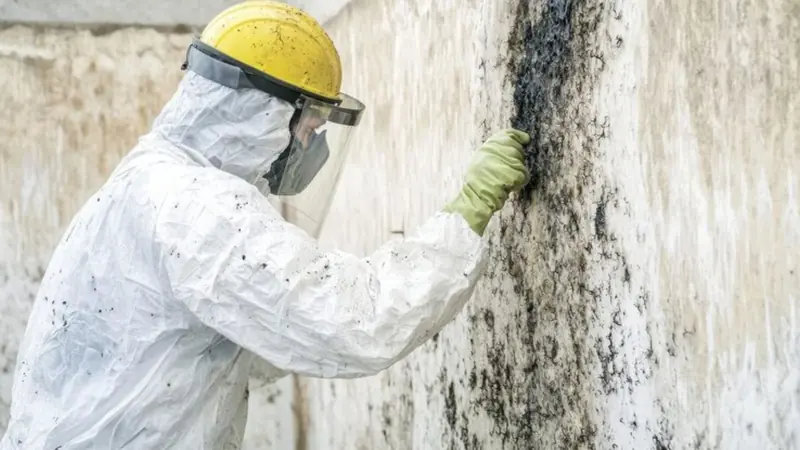
When you can handle it yourself and when to stop
The line most people use is size and material. Small, surface-level growth on hard, nonporous materials is within reach of a careful homeowner. Anything on soft materials, anything that keeps spreading and anything tied to a leak you cannot find is not.
| Situation | Reasonable to clean yourself | Better to call a professional |
|---|---|---|
| Spots on tile and grout lines | Yes, with ventilation and protective gear | If it returns quickly after cleaning |
| Black line in tub caulk | Remove and re-caulk once the area is dry | If caulk comes away wet or the wall behind is soft |
| Fan-grille and ceiling paint spots | Small patches, after fixing ventilation | If the ceiling is stained or bubbling |
| Drywall or wood that is soft or crumbling | No | Yes, because the material may need removal |
| Growth across a large area | No | Yes, and expect containment |
| Musty smell with nothing visible | Look for the source first | If it stays after you rule out the obvious |
Cleaning small areas safely
Dry brushing or scrubbing a dry patch sends spores into the air. Wet methods keep it down. If cleaning does not remove the stain on a porous surface such as drywall or unsealed wood, the surface may need replacing.
- Open a window or run the fan, and keep the bathroom door closed to the rest of the house.
- Put on an N95-type respirator, gloves and eye protection. Protective measures like these are standard for any mold cleanup.
- Wipe hard surfaces with detergent and water, or a cleaner labeled for mold, using a stiff brush on grout. Never mix cleaning products, and follow the label on each one.
- Bag the rags and sponges, seal the bag and put it in the trash.
- Dry the area fully with a towel and a fan. Leaving it damp invites regrowth.
- Cut out and replace caulk that is stained all the way through.
Fix the moisture so the cleaning counts
Run the exhaust fan during every shower and for fifteen to twenty minutes afterward. A fan that does not pull a sheet of toilet paper against its grille is not doing much and may be blocked or poorly ducted. Also check that it vents outside, not into the attic.
Squeegee the glass, hang towels to dry and replace failing caulk. Fix drips promptly. None of this is a cure, but each step removes some of the moisture that mold needs to grow.
Not sure which way to go? Talk it through with dispatch.
(630) 580-6401Bensenville bathrooms and ventilation
Roughly half of Bensenville homes are occupied by renters according to the CMAP housing toolkit, so many bathroom mold problems belong to a landlord as much as a tenant. If you rent, report the mold and the moisture source in writing with dated photos, and avoid cutting into walls or ceilings yourself. A written record protects you and gets the right person fixing the leak.
The Illinois Mold Remediation Registration Act, Public Act 103-0893, exists, but the Illinois Department of Public Health says remediation professionals are not required to register until rules are adopted, and proposed rules appeared in the Illinois Register on October 17, 2025. Check the IDPH mold remediation registration page for the current status before you hire, and ask any company whether its crews work to the S520 standard.
When the problem is bigger than the surface
Mold that keeps coming back to the same wall usually has a hidden moisture source, such as a shower pan that leaks or a leaking joint behind tile. Opening the wall is the only way to see. If drywall is wet or soft, it may need to come out and the cavity may need drying.
Professional work follows ANSI/IICRC S520, the published standard for mold remediation. It covers containing the area, removing affected materials, cleaning and verifying the result. The mold remediation page explains how that process works in a home.
What not to do
Do not paint over mold, since the coating hides it and leaves the moisture in place. Do not caulk over a stained joint, because new caulk over damp growth traps the problem. Do not blast the area with a household fan before cleaning, which only spreads dust and spores around the house.
Also skip the urge to rip out half a wall on a hunch. If you suspect a hidden leak, shut off the water to the fixture, photograph what you see and get the source checked first.
Drying matters as much as cleaning
Wet drywall and framing hold water long after the surface feels dry. Moisture meters read the inside of the wall, and air movers and dehumidifiers pull water out of it. Without that step, a patched wall can stay damp inside.
That is the reason structural drying comes up in mold jobs. Residents of Addison and Franklin Park call about the same bathroom causes: bad fans, old caulk and slow leaks.
Questions about this topic
What kills mold in a bathroom?
Cleaning removes surface growth, and drying the area removes what it needs. Detergent and water, or a cleaner labeled for mold, works on hard surfaces. The lasting fix is controlling moisture with ventilation and repairs.
Can I use bleach on bathroom mold?
Bleach can lighten stains on hard, nonporous surfaces, but it does not fix a moisture problem and it should never be mixed with other cleaners. Read the label and ventilate. On porous materials, surface treatment often does not reach the growth.
How do I know if the mold is behind the wall?
Signs include a musty smell with nothing visible, bubbling paint, a soft wall or floor, and staining on the other side of the wall. A moisture meter or a professional assessment can confirm it.
Do I need testing before cleaning bathroom mold?
Not for a small visible patch. Testing becomes a question when growth is extensive, hidden or tied to a sale or dispute. Health questions belong with a physician, not a test result.
Who fixes bathroom mold in a Bensenville rental?
The landlord generally handles the building, including the leak or ventilation problem that caused it. Report the issue in writing with dated photos.
Do not cut into walls yourself in a rental. Wait for the owner or manager to direct the repair.
Still unsure which page fits your situation? Dispatch can sort it out in one call.
(630) 580-6401