
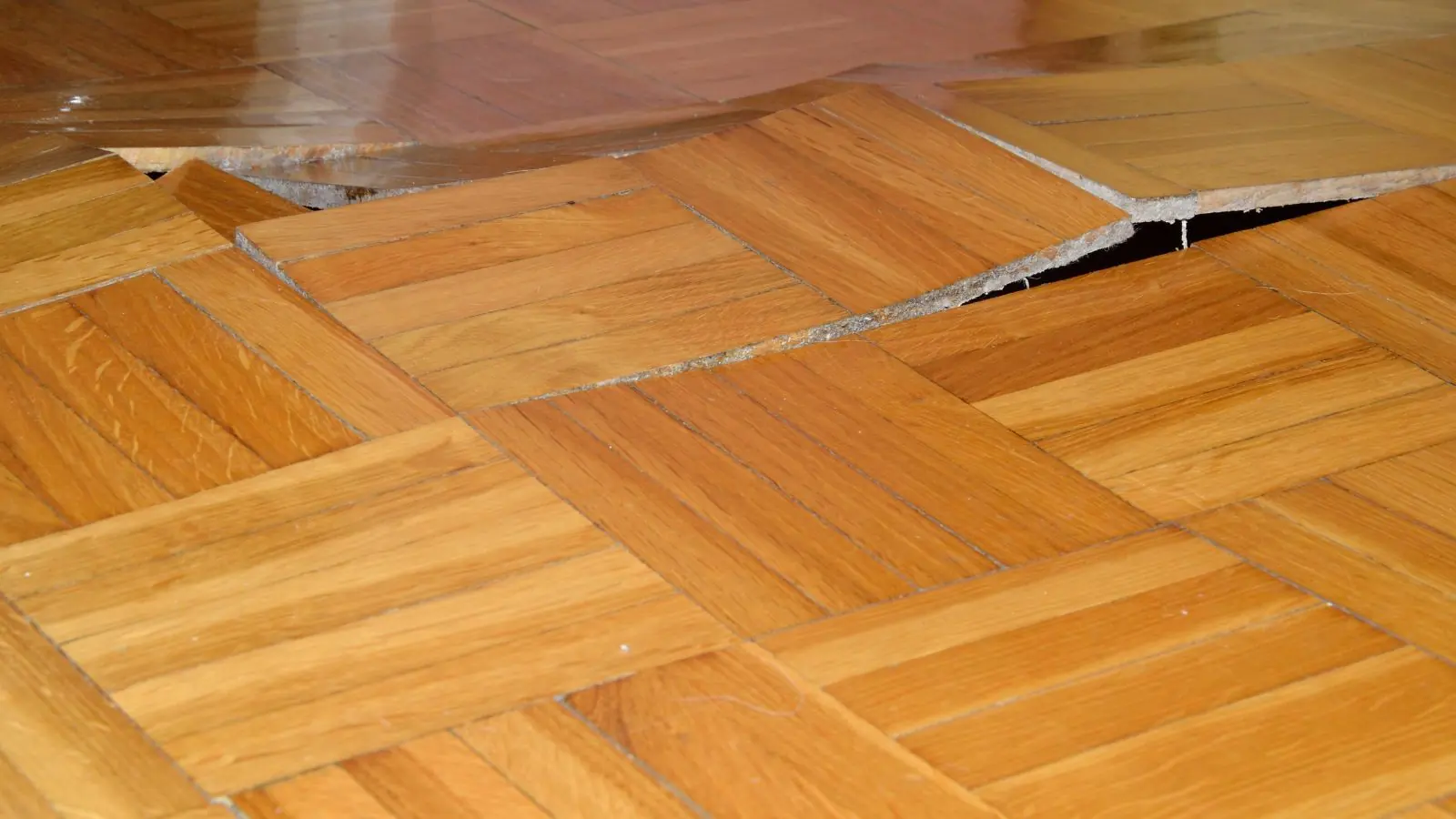
Hardwood floor water damage shows up as boards that cup, crown, darken, or lift from the subfloor after a leak, spill, or flood. Wood absorbs moisture through its edges and underside, so the damage often runs wider than the wet patch you can see.
Whether a floor can be dried in place or has to come up depends on the species, the construction, how long it stayed wet, and what the water carried. This page explains how crews read those clues, what each option costs you in trade-offs, and where Bensenville renters and owners fit in.
Cupping, crowning, and other signs the boards are wet
Cupping is when board edges rise higher than the center, leaving a shallow trough across each plank. It happens because the underside of a board holds more moisture than the top. Crowning is the opposite, with the center higher than the edges, and it often appears when a cupped floor was sanded before it finished drying.
Other signs include dark staining at the seams, a white haze under the finish, gaps that open as boards shrink, and a floor that feels spongy underfoot. A sour smell from the room points to moisture trapped below the surface. Crouch and sight along the floor toward a window. Ridges that look flat head-on show up clearly at a low angle.
Solid, engineered, and laminate floors react differently
Identify what you have before deciding anything. Solid planks are the same wood top to bottom, usually about three quarters of an inch thick. Engineered boards glue a hardwood veneer onto plywood or fiberboard layers, and laminate is a printed photo layer over fiberboard, not wood at all.
| Floor type | How it reacts to water | Usual outcome |
|---|---|---|
| Solid hardwood | Swells and cups, then shrinks back as it dries | Often saved if caught early and dried slowly |
| Engineered hardwood | Layers can separate and thin veneer can lift | Saved only after light exposure, otherwise replaced |
| Laminate | Fiberboard core swells and does not shrink back | Usually replaced once edges lift |
| Hardwood over concrete | Moisture can sit under glue or sleepers | Moisture readings decide, often lifted |
| Floating plank floor | Water travels under the planks and spreads | Planks can be lifted, dried, and sometimes reinstalled |
Drying mats or replacement: how the decision gets made
Floor drying mats and panels sit on the surface and pull moisture upward with suction or warm airflow, usually alongside air movers and LGR dehumidifiers. They work best on solid hardwood that has been wet for a short time over a sound subfloor. Drying is slow on purpose, because forcing heat onto wet wood can split boards.
- Moisture meters read the boards and the subfloor to find the true wet footprint.
- A thermal imaging camera shows cool, wet areas that run beyond the visible stain.
- Crews set drying mats, air movers, and dehumidifiers, then log readings every day.
- Boards that stay above target, or that have buckled off the subfloor, are marked for removal.
- Once readings match a dry reference board, the floor can be sanded and refinished.
Not sure which way to go? Talk it through with dispatch.
(630) 580-6401What sits under the boards
A wood subfloor or concrete slab holds water longer than the flooring above it. Refinish over a damp subfloor and the boards can cup again within weeks. That is why crews take readings through the full depth of the assembly, not only at the surface.
Water also runs along joists and into insulation, and it can drip into rooms below. If the floor sits above a basement or crawl space, drying has to cover both sides, which is where structural drying and dehumidification matters. A kitchen floor soaked by a failed supply line, for example, may need the cabinet toe-kicks opened as well, a case covered under kitchen water damage restoration.
Finishes, sanding, and what a refinish can fix
Polyurethane seals the top of a board but not its sides or underside, so water finds its way in through the gaps. Both oil-based and water-based coatings can cloud white when moisture sits under them. Sometimes the haze clears as the board dries, and sometimes the finish has to be sanded off.
Sanding removes surface staining and light cupping once the boards are dry and flat. Deep black stains mean the wood itself has been affected, and those boards are replaced. Site-finished floors are harder to blend than factory-finished ones, so ask how the edge of a repair will look before work starts.
Replace a section
New boards are woven into the old pattern. Matching stain, sheen, and board width takes care, and a patch can show in raking light.
Sand the whole room
Refinishing the full floor hides transitions between old and new boards. It costs more in labor and finish but gives an even look.
Replace the room
When boards have buckled across the space or the floor is laminate, full replacement is often the cleaner option.
What changes the cost of hardwood floor repair
Price follows the scope of work, and five factors move it the most, listed below.
Many homeowners policies respond to sudden and accidental water damage, while slow leaks and neglect are frequently excluded. Check your policy, and ask your insurer before any permanent repair. Your own scope sets the real figure, so call (630) 580-6401.
- Square footage of wet flooring, plus the area around it that has to be opened to dry.
- Species and construction, since solid oak and thin engineered planks have different repair paths.
- Whether drying mats can be used or boards must be removed.
- Subfloor condition, including damp underlayment or old adhesive that needs clearing.
- Sanding, staining, and finish coats, and how closely a repair must match the room.
Bensenville rentals, owners, and the wet floor
Census figures put Bensenville at 50.8% owner-occupied, so about half of local households rent. That matters for a wet floor because the tenant usually sees the damage first while the landlord controls the repair. Photograph the floor, tell the landlord in writing, and keep the date, so the record exists before anyone pulls up a board.
If the water came from a unit above, the ceiling below may need attention too, which is covered under ceiling water damage repair. Crews also work in nearby towns such as Addison, and the same floor questions apply there.
Questions about Hardwood Floor Water Damage
Can hardwood floors be saved after water damage?
Often, yes, when the floor is solid hardwood, the water was clean, and drying starts quickly. Engineered and laminate floors are less forgiving.
A moisture reading of the boards and the subfloor tells you more than the surface look does.
How long does it take for hardwood to dry out?
Several days is common, and thick solid planks can take longer. Crews check readings daily and stop only when the wood matches a dry reference board.
Rushing the process with high heat can split or cup the boards.
Why are my floors cupping weeks after the leak?
The boards were probably dried at the surface while the underside or subfloor stayed damp. Moisture below keeps pushing the edges up.
A meter reading through the subfloor will show whether the source is still wet.
Is engineered hardwood repairable after a leak?
Light exposure sometimes dries out without lasting harm. Once the layers separate or the veneer lifts, those planks usually need replacing.
The veneer is thin, so sanding is limited to one or two refinishes at most.
Should I sand and refinish right away?
No. Sanding wet wood can lock in moisture and lead to crowning. Wait until the boards and the subfloor read dry.
Let the crew confirm readings before any finish work is scheduled.
What should I do right after a spill or leak?
Stop the source, wipe up standing water, and lift rugs and furniture off the boards. Run a fan and keep windows closed on humid days.
Photograph the floor, then call to ask about drying options.
Still unsure which page fits your situation? Dispatch can sort it out in one call.
(630) 580-6401