
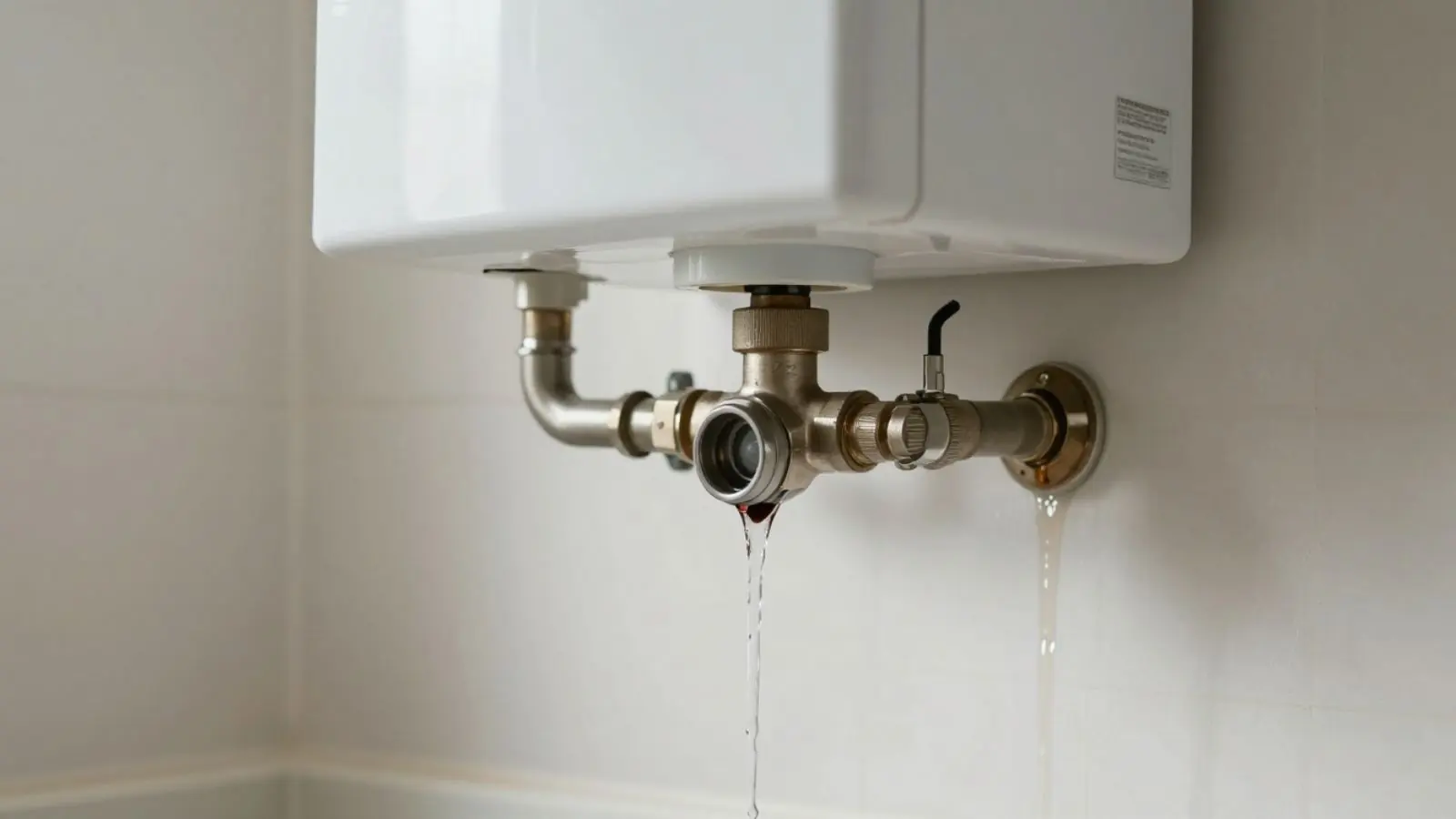
Frozen pipe water damage often shows up at the thaw, when ice that was holding a crack closed melts and the line begins to leak. This is an emergency, and the dispatch line is open 24/7. Close the main water valve, keep power off wet areas you cannot reach on dry floor, and move valuables up and away from the water.
The damage comes from a split in a pipe that froze solid, and the restoration work is extraction, finding hidden moisture and drying.
The pipe thawed and now it is leaking
A line that froze and then warmed up may spray, drip inside a wall, or run quietly for hours before a ceiling stain gives it away. Treat any new sound of running water, wet drywall or a sudden drop in water pressure as a leak until proven otherwise. Same-day service is offered where available, including after hours and on weekends.
If water is near the electric panel, a light fixture or an outlet, or you smell gas, leave and call the electric utility, the gas utility or 911 before calling the line.
- Close the main water valve, usually near where the supply enters the basement or utility room.
- Open a cold tap on the lowest floor to let the remaining water drain.
- Keep the heat on so the rest of the plumbing does not freeze again.
- Photograph wet walls, ceilings and the damaged section if it is visible.
- Call a plumber for the repair and the dispatch line for water removal.
How a pipe freezes and why it splits
Water expands as it turns to ice. When a plug of ice forms inside a pipe, the water trapped between the ice and a closed faucet has nowhere to go, so pressure builds until the pipe wall gives way. The split is usually next to the ice, not at the plug itself.
That is why pipes in exterior walls, unheated crawl spaces, garages, attics and under-sink cabinets on cold walls fail first. They sit closest to cold air, and the heated house never reaches them.
Warning signs before the break
A line can give notice. Catching it early can mean a thaw instead of a flood.
- A faucet that runs only a trickle or not at all, especially on one side of the house.
- Frost on a visible pipe or a pipe that feels much colder than its neighbors.
- A bulge or a hairline crack in an exposed line.
- Odd smells from a drain that has a frozen trap or vent.
- Water stains that appear on a ceiling or wall after a cold snap, right when the building warms.
Water spreading or a smell you cannot place? Talk to dispatch now.
(630) 580-6401Thawing a pipe without making it worse
If the line has not yet leaked, open the faucet slightly so melting water has an exit and warm the pipe gradually. Never use an open flame, which can ignite framing and insulation. Never thaw a pipe that is already cracked or leaking, because the repair comes first.
The Village of Bensenville keeps an Avoid Freezing Pipes page on bensenville.gov, which is worth a look for prevention advice before the next cold stretch.
| Method | Safe to use? | Why |
|---|---|---|
| Hair dryer on low | Yes, on a dry floor | Gentle, controllable heat applied from the faucet toward the frozen section |
| Warm towels around the pipe | Yes | Slow, but no risk to framing |
| Portable heater aimed at the area | With care | Keep it clear of insulation and never leave it unattended |
| Propane torch or open flame | No | Fire risk inside walls, and it can boil water in the pipe |
| Waiting it out | Only if no leak | A cracked pipe will leak at the thaw, so check carefully |
Hidden leaks behind walls and above ceilings
Frozen pipes often run in cavities, so damage hides. Moisture meters read dampness through drywall, and a thermal imaging camera shows cooler wet patches without any cutting. Crews then decide what to open.
Water that has dropped through a floor can end up in the ceiling below, which is covered on the ceiling water damage repair page. If drywall has soaked through, the wall and drywall water damage repair page explains when it is cut out and when it can be dried in place.
Exterior walls
A split here can leak into insulation and run down the cavity for hours. Paint blisters and baseboards cup before water ever reaches the floor.
Crawl spaces and garages
Water collects on soil or concrete where nobody looks. See crawl space water damage when the void under the floor is wet.
Attic and ceiling lines
Water drops through insulation and stains the ceiling below. A heavy stain means the drywall may be holding liquid.
Under-sink cabinets
Particleboard swells quickly. Supply lines on cold exterior walls fail first, and the cabinet floor needs inspection.
What changes the cost of frozen pipe cleanup
The price follows how much water got out and where, so it is set after the building is seen. The main factors are listed below.
Sudden and accidental pipe breaks are often covered by homeowner and renter policies, while damage from neglect, such as heat left off in a vacant house, may not be. Ask your insurer what your policy actually covers what it needs before permanent repairs. Scope and price come first, ahead of the first tool coming out. Call (630) 580-6401 to talk through your own situation.
- How long the thawed line leaked before anyone noticed.
- How much water reached walls, ceilings and the floor below.
- Whether insulation and drywall must come out to reach wet cavities.
- How many days of air movers and dehumidifiers the structure needs.
- Whether flooring, cabinets or trim must be replaced.
Vacant units, rentals and who is responsible
About half of Bensenville homes are rented, and rentals sit empty between tenants. A frozen line in a vacant unit can leak for days with no one around, so landlords and property managers should check heat and water shut-offs during cold spells. If you rent and see a stain, tell the landlord the same day and photograph it.
Sewer, water heater and roof work in Bensenville can need a village permit, and the Community and Economic Development office at 630-350-3413 can say whether a repair does. Crews also serve nearby towns, including Franklin Park. For water removal, the water extraction page explains the equipment.
Questions about Frozen Pipe Water Damage
Do you handle frozen pipe water damage emergencies at night or on weekends in Bensenville?
Yes. Day or night, a call reaches dispatch, which sends licensed and insured restoration professionals. Dispatch aims for a same-day visit when it is available, so call even when the leak starts overnight.
My pipe froze but is not leaking. Should I call?
Call a plumber first, since the pipe needs to be inspected for cracks. If it leaks at the thaw, close the main valve and call the line.
Can a frozen pipe leak days after it thawed?
Yes. A small crack can seep slowly and soak a wall cavity before any stain shows. A moisture meter and thermal camera find it without guessing.
Should I turn the water off if a pipe is frozen?
If a pipe is cracked, yes. If you are unsure, shutting the main valve costs little and prevents a large loss while you check.
Does insurance cover frozen pipe damage?
Sudden bursts are often covered, but policies vary and neglect can limit coverage. Read the policy and ask your insurer what documentation it needs.
Will drying stop mold after a frozen pipe leak?
Mold needs moisture, so drying quickly removes the condition it depends on. If mold appears anyway, testing and remediation follow ANSI/IICRC S520, and health questions go to a physician.
Still unsure which page fits your situation? Dispatch can sort it out in one call.
(630) 580-6401