
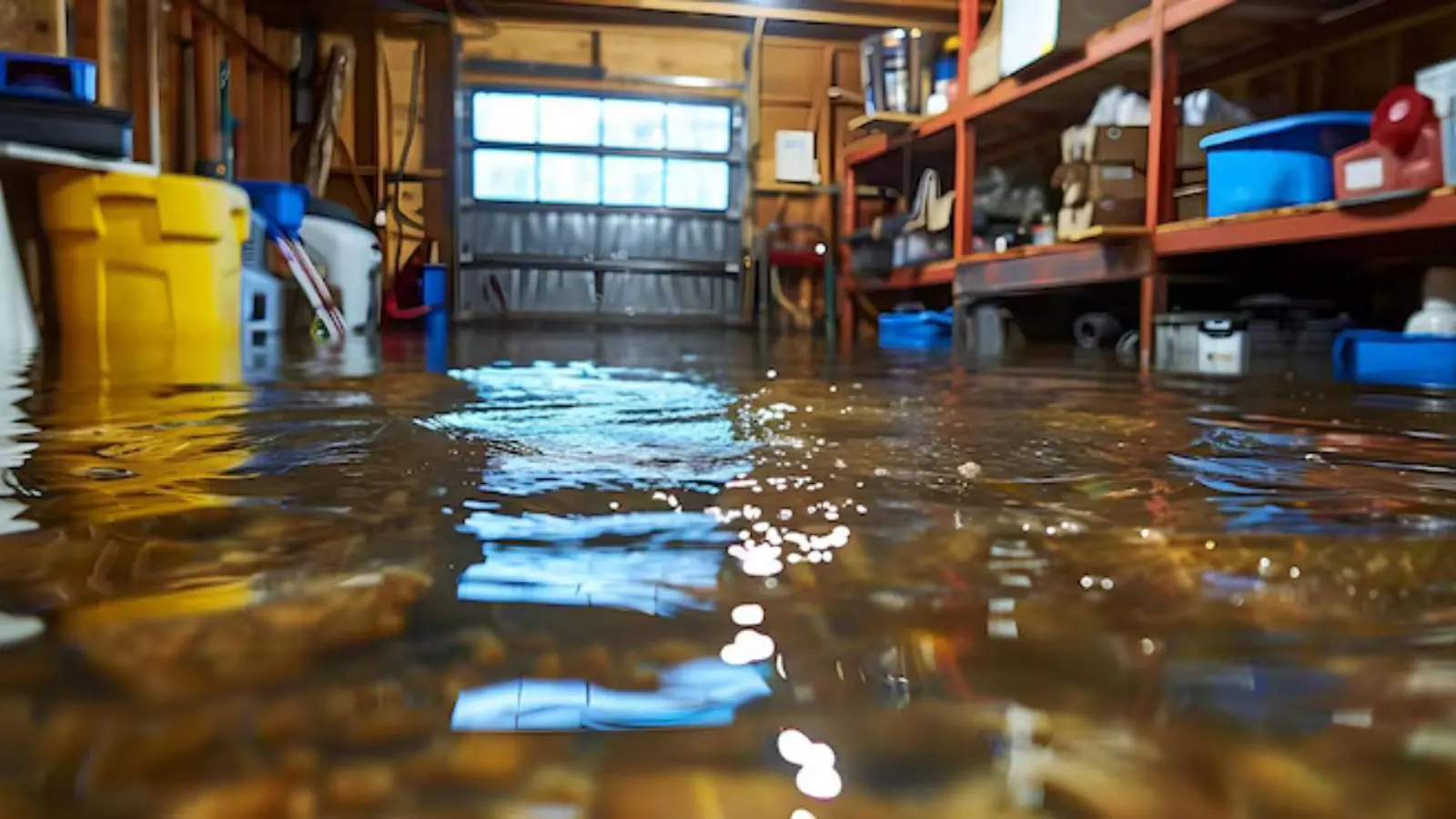
Flood water entering a home is an emergency, and the dispatch line answers 24/7. While you wait, stay out of the water, shut off the main water valve if it is reachable, leave electrical panels alone unless you can stand on dry floor, lift valuables up, and keep children and pets away.
Flood damage cleanup is the removal of water that came from outside, such as an overflowing creek, surface runoff or rising groundwater, along with the mud and contamination it left behind.
Water is rising inside or around the house
Outdoor flood water is not clean. It carries soil, fuel, chemicals and sewage from drains that overflow, so treat every inch as contaminated. Dispatch offers same-day response when it can, including after hours, but the first decisions are yours and they are about safety.
If water has reached outlets, the panel or any appliance, or you smell gas, get out and call the electric utility, the gas utility or 911 before calling the line. Do not wade through flooded rooms to reach a breaker.
- Move people and pets to higher ground or an upper floor.
- Do not touch electrical equipment standing in water.
- Photograph or video the water line, the rooms and what is damaged.
- Lift small valuables, documents and medications up and out of reach.
- Wait for crews with protective gear before wading in to clean.
Why creek and surface water is Category 3
Under the ANSI/IICRC S500 water damage standard, water is sorted into categories by contamination. Water that comes from outside and crosses ground, yards and storm drains is treated as Category 3, meaning it can carry harmful organisms. That changes the job from a drying task into a cleaning and removal task.
Homeowners can ask any company whether its crews work to S500. A crew that treats flood water like a pipe break is not following it.
| Water source | Category | How it is handled |
|---|---|---|
| Supply pipe, clean at the start | Category 1 | Extract and dry, with a quick start so it stays clean |
| Washing machine or dishwasher discharge | Category 2 | Extract, clean and often remove porous materials |
| Creek, river or surface runoff | Category 3 | Protective gear, removal of porous items, cleaning and disinfecting |
| Sewage or a sewer line backup | Category 3 | See sewage backup cleanup |
| Groundwater seeping through the foundation | Category 2 or 3 | Treated on its source and contact, usually as contaminated |
Bensenville's creeks and what the Village says about them
The Village of Bensenville lists three flood sources, each with its own floodway and floodplain: Willow Creek, Silver Creek (also called Bensenville Ditch) and Addison Creek with its tributaries. The Village states plainly that it cannot prevent flooding. So whether your lot sits in a floodplain is a question to answer before the next storm, not during one.
The Engineering Division at Village Public Works, (630) 350-3435, helps residents find out whether a property is in a floodplain. The Village page also links to the FEMA Map Service Center, where you can check the flood map for your address.
Any new project has to meet the Village Code and the DuPage County Stormwater and Floodplain Ordinance, and because the Village is a partial waiver community, DuPage County reviews development in Special Management Areas. If you plan to rebuild, ask before you order materials.
April 2013 and why rain totals matter
On April 17 and 18, 2013, O'Hare, next to Bensenville, recorded 5.55 inches of rain in two days, a record April two-day total for Chicago according to the National Weather Service. April 2013 reached 7.83 inches at O'Hare, and the Des Plaines River set record crests that month. That is regional context, not a claim about any one Bensenville street.
It shows how much water the area can receive in a short stretch. The Metropolitan Water Reclamation District built the Addison Creek Reservoir in Bellwood to hold about 195 million gallons for the same creek system, but Bensenville is not among the six communities MWRD lists as benefiting. Do not assume the reservoir protects your property.
Water spreading or a smell you cannot place? Talk to dispatch now.
(630) 580-6401Flood insurance is separate, so check your policy now
Most homeowner and renter policies exclude flood damage. Flood coverage is usually bought separately, and a standard policy will often pay for a burst pipe but not for creek overflow. Read your policy now rather than after a loss, and ask your insurer how flood is defined.
Illinois Department of Insurance guidance says to photograph or video damaged areas, keep receipts for emergency repairs, make only essential temporary repairs and hold off on permanent ones until you speak with the insurer. Report damage as soon as you decide to file, and ask how long you have.
What gets removed and what can be saved
After contaminated water, porous materials are the usual casualties. Hard surfaces can generally be cleaned and disinfected. Crews then dry the structure with air movers and LGR dehumidifiers, as described under structural drying and dehumidification.
Carpet and pad
Carpet that sat in contaminated water is normally discarded with the pad. Sealing and drying cannot make porous fibers safe again.
Drywall and insulation
Wicking water goes above the visible line. Crews often cut walls above the flood line and remove wet insulation behind them.
Hard floors and trim
Tile, sealed concrete and some solid wood can be cleaned and dried. Laminate and particleboard swell and are replaced.
Furniture and belongings
Upholstered pieces are rarely saved after Category 3 water. Solid wood and metal can often be cleaned. Photograph items before they leave.
What changes the cost of flood damage cleanup
Price follows the water category, the depth and the rooms involved, so it is set after the damage is seen. The main factors are listed below.
Remember that flood insurance is separate and your standard policy may not respond, so ask before you assume. You hear the scope and the price first, and you decide after that. Want a number for your own home? Call (630) 580-6401.
- Water category and the protective gear and disposal it requires.
- Depth of water and how much of the building it reached.
- How much porous material, such as carpet, pad and drywall, must be removed.
- Cleaning, disinfecting and drying time before reconstruction.
- Mud, debris and the access crews have to the property.
After the cleanup, drying and rebuilding
Once the water is out and the contaminated materials are gone, drying takes days, and moisture readings tell crews when the building is ready for new drywall and flooring. Basement flooding follows the same path, covered at basement water damage cleanup. Crews serve nearby towns, including Addison.
Questions about Flood Damage Cleanup
Do you handle flood damage cleanup emergencies at night or on weekends in Bensenville?
Yes. The line never closes, and the crews it sends are licensed and insured. A same-day visit is offered when the schedule allows, so call at any hour.
Does homeowners insurance cover flood damage?
Usually not. Most policies exclude flood unless flood coverage was bought separately. Review your policy and confirm with your insurer before you decide what to do.
How do I find out if my house is in a floodplain?
Call the Engineering Division at Village Public Works, (630) 350-3435, and check the FEMA Map Service Center for your address. Ask the Village if you are unsure what you find.
Is flood water really that dangerous?
It can carry bacteria, chemicals and sewage. Treat it as contaminated, wear protective gear, and have crews handle the cleaning.
Can I keep my carpet after a flood?
Not usually. Carpet and pad that sat in contaminated water are typically discarded. Hard surfaces have better odds.
Can I start repairs before the insurer visits?
Make essential temporary repairs and document everything. Illinois guidance says to hold off on permanent repairs until you speak with the insurer, which may not pay for repairs it did not authorize.
Still unsure which page fits your situation? Dispatch can sort it out in one call.
(630) 580-6401