
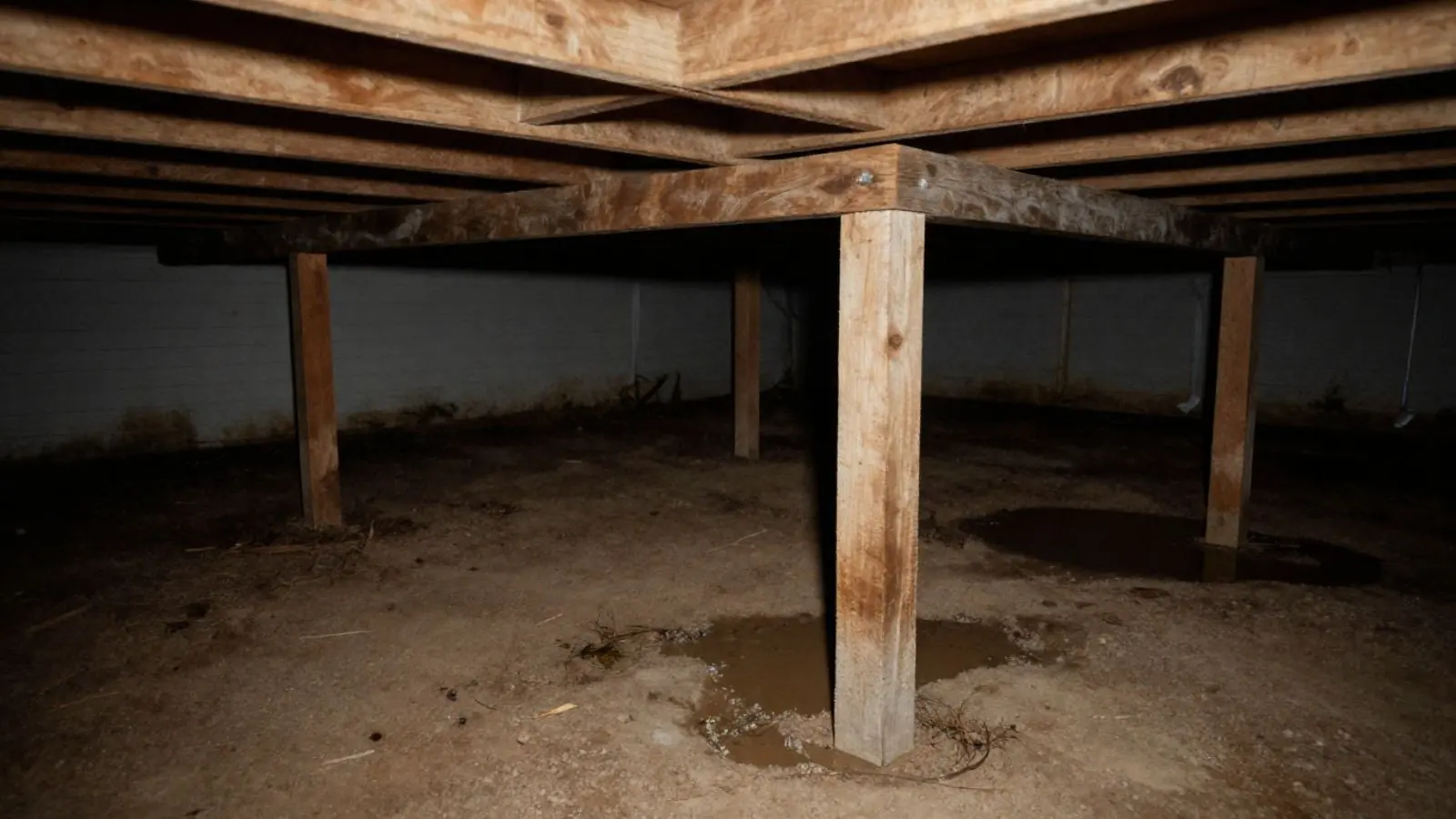
Crawl space water damage is water in the shallow void between the ground and the first floor, where it wets soil, insulation, ductwork and the joists that hold up the house. Because nobody looks down there often, the first clue is usually a musty smell or a soft, springy floor above.
This page covers how the water gets in, what it affects, and how the space is dried.
What a crawl space is, and how water gets into one
A crawl space is a short foundation wall that lifts the floor a couple of feet off the ground. Water enters in four ways. Rain or snowmelt runs through vents and cracks, groundwater rises in the soil, plumbing or HVAC lines leak into it, and humid air condenses on cool surfaces.
Not every home has a crawl space, and this page does not suggest they are common in Bensenville. Check how your own home is built, and if you are unsure, look at the foundation from outside or ask a contractor who has worked on it.
Signs from above: musty air, soft floors and sweating ducts
You can often tell from inside the house. Floors over a wet crawl space feel cold, spongy or uneven, and wood flooring may cup. A musty smell that rises through floor registers is another common clue.
- A musty or earthy odor near floor vents.
- Floors that bounce or sag between walls.
- Condensation on ducts or pipes when you look through the access hatch.
- Wet, matted or sagging insulation between the joists.
- Sump pump that runs often, or one that has stopped.
Standing water, damp soil or humid air: three different problems
The word damp covers three situations that need three different plans. Telling them apart saves time and money, and it keeps the drying equipment from being sized wrong.
| Condition | Likely source | What it needs |
|---|---|---|
| Standing water on the soil | Surface or groundwater, or a burst line | Pump out, then trace the source |
| Wet soil, no standing water | Seepage or a past event | Dehumidifying and a ground cover |
| Humid air, dry soil | Vents, condensation, bare soil | Vapor barrier and humidity control |
| Wet insulation, dry soil | Plumbing or duct leak above | Remove insulation, fix the line |
Not sure which way to go? Talk it through with dispatch.
(630) 580-6401What water ruins first: vapor barrier, insulation and joists
Fiberglass insulation soaks up water and falls off the underside of the floor, which leaves it useless for warmth. Plastic vapor barrier on the ground can hold water in place or tear when people crawl across it. Wood joists and the subfloor can swell, stain and begin to lose strength if they stay wet for long.
Because wood must stay wet to rot, the repair goal is to dry it quickly and keep it dry. Mold needs moisture too, and if it is visible, mold remediation follows S520. Health questions belong to a physician, not a restoration company.
How crews pump and dry a crawl space
Water gets removed first using submersible pumps and extraction units, working from the access hatch in a tight space. Crews wear protective gear, since the area can hold dirt, pests and wet wiring. If there is a sump, they check that it runs and discharges away from the foundation. The pumping side overlaps with water extraction.
After pumping, a moisture meter and thermal imaging camera map the wood. LGR dehumidifiers and air movers dry the joists, and wet insulation is removed. The work follows ANSI/IICRC S500, and daily readings tell you when drying is complete.
Long-term fixes, such as grading, gutters, a sump or a sealed ground cover, are contractor decisions. They make sense once the source is known, and structural drying explains the monitoring that comes first.
What changes the cost of crawl space water damage
Dispatch explains scope and price up front, ahead of any work. A shallow puddle is a short job and a flooded, insulated space is not. Insurance note: sudden and accidental water damage is often covered, groundwater and flood damage are usually excluded without separate flood coverage, and gradual seepage often is not covered, so put the coverage question to your insurer. Questions about your case? Call (630) 580-6401.
- How deep the water is and how much has to be pumped.
- Crawl space height and hatch size, which affect labor.
- How much insulation, ground cover and wood is wet.
- Whether wiring, ducts or a water heater sit down there.
- Days of dehumidification and the size of the area.
Checking your own home, floodplains and records in Bensenville
The Village says it cannot prevent flooding, and Bensenville has three sources with their own floodplains: Willow Creek, Silver Creek and Addison Creek. The Village Engineering Division at Public Works, (630) 350-3435, helps residents learn whether a property is in a floodplain, and the FEMA flood map shows it for an address. Check before you decide on a sump, grading or ground cover, since flood coverage is a separate policy.
Half of local homes are rentals. A tenant usually cannot see the crawl space, so ask the landlord to open the hatch and photograph it, and send a dated message. Owners should keep photos of the space dry as a baseline.
Neighbors in Wood Dale and nearby towns can call the same line, and a wet basement next door may be a basement water damage cleanup job.
Questions about Crawl Space Water Damage
How can I tell if my crawl space has water in it?
Open the access hatch and look with a flashlight. Standing water, dark soil, wet insulation or dripping ducts are signs. If you cannot or prefer not to go down, a restoration crew can inspect it with moisture meters.
Is a wet crawl space the same as a flooded basement?
The cause can be the same, but the work is different. A crawl space is cramped, often has bare soil, and sits directly under the floor framing, so drying focuses on joists and subfloor.
Will a dehumidifier alone fix a damp crawl space?
Not if water is entering. A dehumidifier handles humid air, while standing water must be pumped and the source found. Equipment sized for the space comes after that.
Does insurance cover crawl space water damage?
It depends on the cause. Sudden and accidental plumbing damage is often covered. Groundwater or flood is usually excluded unless you bought flood coverage, and slow seepage often is not covered. Ask your insurer and keep photos.
Do I need to remove all the insulation after water gets in?
Wet fiberglass usually has to come out because it stays damp and sags. Dry sections may stay. Moisture readings decide.
Who do I ask whether a floodplain applies to my address?
Call the Village Engineering Division at Public Works, (630) 350-3435, and check the FEMA flood map for your address. Neither source predicts the next storm.
Still unsure which page fits your situation? Dispatch can sort it out in one call.
(630) 580-6401