
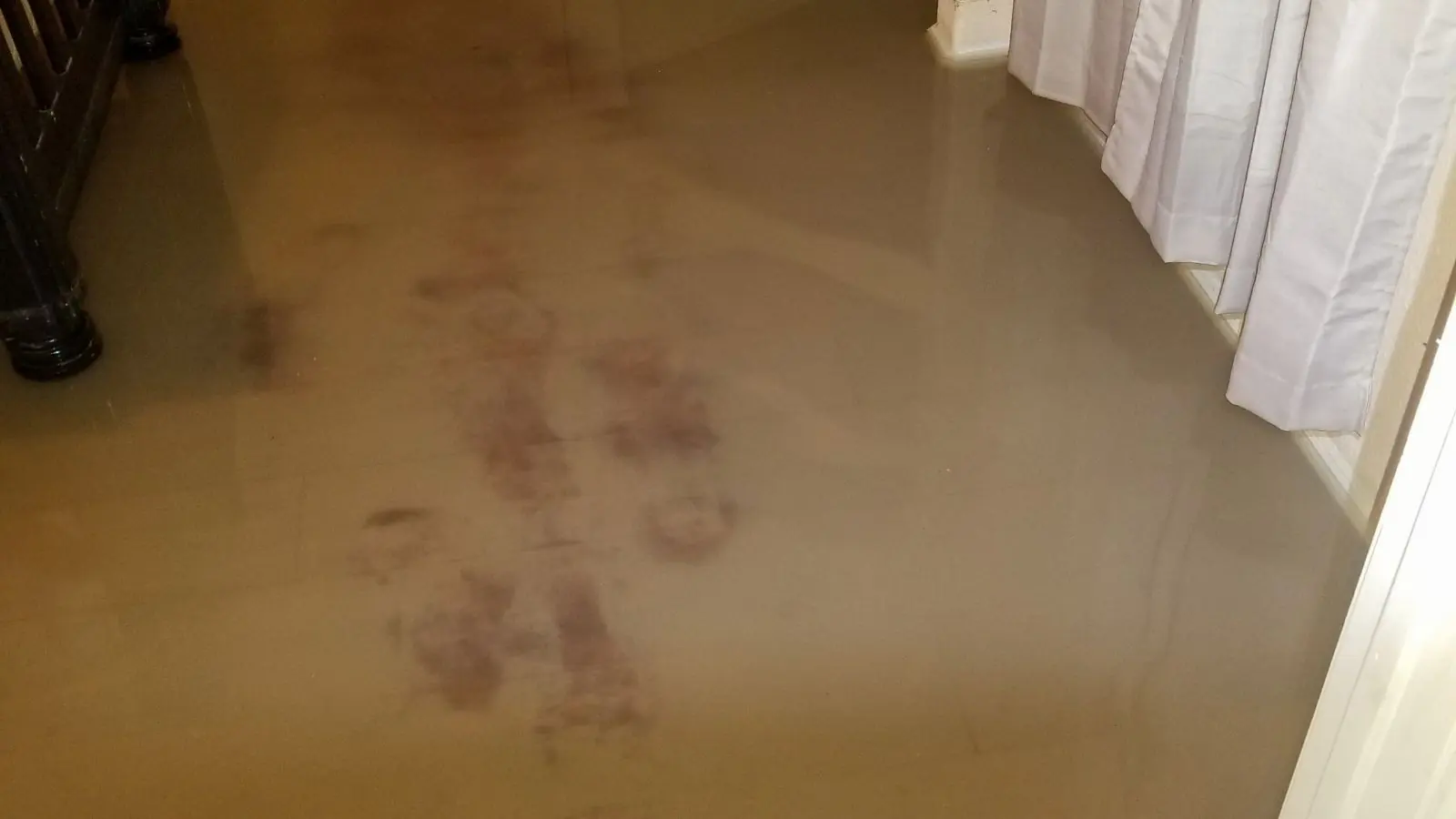
Carpet water damage means the carpet, the cushion beneath it, and the floor under both are holding water from a leak, an overflow, or a flood. The surface may feel only damp while the pad soaks up far more, like a sponge under a thin cloth.
Carpet can sometimes be saved, and sometimes it cannot. The answer turns on where the water came from, how long it sat, and how the carpet is built. The sections below walk through those checks in the order a crew works through them.
Start with the water: what soaked the carpet
The source of the water comes before anything else. Water from a clean supply line starts out differently from water that came through a washing machine drain, and both differ from sewage or creek water. Restoration standards group water into categories for this reason, and the category shapes what can be kept.
Speed matters in every case, because water spreads outward through the pad and downward into the floor while you decide what to do. Rather than counting hours, treat the loss as time-sensitive and call early.
| Water source | Water category | Usual carpet outcome |
|---|---|---|
| Broken supply line or sink overflow | Clean at the start, can change with time | Carpet often saved, pad often replaced |
| Washing machine or dishwasher discharge | Used water, not clean | Judged case by case, pad usually replaced |
| Aquarium or water bed leak | Clean to mildly dirty | Carpet may be saved, check the floor under it |
| Toilet overflow with waste | Contaminated | Carpet and pad are normally removed |
| Creek or surface flood | Contaminated | Carpet and pad are normally removed |
Carpet, pad, and subfloor: three layers, three outcomes
The carpet face is the part you see, and it is often the easiest layer to dry. Synthetic fibers like nylon and polyester do not absorb water, so they release it under extraction and airflow. Wool and natural-fiber carpets take longer and can stain or shrink.
The pad is a foam or rebond cushion that acts as a sponge and is hard to dry in place. It is cheap compared with the carpet, so replacing it is common even when the carpet itself is lifted, dried, and put back. Below that, the subfloor of plywood or concrete needs its own moisture readings before anything goes back down.
Extraction and drying, step by step
Pulling water out mechanically is faster than evaporating it. A truck-mounted or portable extraction unit with a weighted wand removes far more water than a household wet vacuum, and that head start shortens drying time.
- Stop the source and, if the carpet is in a clean-water loss, extract the surface and pad water first.
- Lift a corner of the carpet at a wall and check the pad and the tack strip for water.
- Float or lift the carpet so air can reach the pad and the floor, and discard the pad if it is wet through.
- Place air movers and LGR dehumidifiers and close the room, with moisture meters guiding the daily checks.
- Reinstall the carpet over new pad once the subfloor reads dry, then stretch it back into place.
Not sure which way to go? Talk it through with dispatch.
(630) 580-6401Save it or replace it: how to weigh the options
A crew weighs category, age, fiber type, and how far the water traveled before giving a recommendation. A fair recommendation names the reason, so ask for it and ask to see the wet pad if it is removed.
Usually worth saving
Newer synthetic carpet after a clean-water loss, extracted soon, with a dry subfloor. Pad is replaced and the carpet is stretched back down over it.
Judged case by case
Older carpet, wool blends, or water that sat for a while. A crew checks backing, seams, and odor before committing to a repair.
Usually replaced
Carpet that took contaminated water, has delaminated backing, or is glued down over a slab that stayed wet. Removal protects the rest of the home.
Wicking, odor, and stains after the carpet looks dry
Brown stains that appear along a wall days later usually come from wicking, when dirt dissolved in the water travels up the fibers as the surface dries. A surface cleaning can lift them, but a reading will show whether water is still in the cushion or the baseboard below.
A musty smell after a wet carpet means moisture is still present somewhere in the structure. If the smell points to a wall or a concealed area, mold remediation explains what happens next. Stairs and closets also hold water where airflow is poor, so crews check them as part of any carpet job.
What affects the cost of carpet water damage work
Several factors move the price of a carpet job, and a crew can only name a real figure after seeing the room. The main ones are listed below.
Sudden and accidental water damage is often covered by homeowners policies, while gradual leaks and neglect often are not, and flood damage is usually excluded and needs separate flood coverage. Confirm coverage with your insurer what documentation it wants. Ready to scope it? Call (630) 580-6401.
- Size of the wet area, including carpet that must be lifted to dry the pad and floor.
- Water category, since contaminated water adds removal and disposal.
- Pad type and carpet type, and whether the carpet can be reinstalled.
- Subfloor drying time, with extra equipment days for concrete.
- Stretching, re-tacking, and any cleaning after the job.
Bensenville renters, owners, and wet carpet
Half of Bensenville households rent, based on 50.8% owner-occupied in the Census figures. For a tenant with wet carpet, that means telling the landlord in writing and photographing the carpet, the water source, and any belongings that got wet. A landlord who has the photos can act sooner, and your record is protected if a question comes up later.
Carpet over a basement slab is a different case, handled on the basement water damage cleanup page. Where standing water is still on the floor, water extraction comes first. Crews also serve nearby towns such as Franklin Park.
Questions about Carpet Water Damage
Can wet carpet be saved?
Sometimes. After a clean-water loss, carpet that is extracted promptly and dried can often be kept, while the pad is replaced.
If the water was contaminated, carpet and pad are normally removed.
Why is the carpet pad replaced so often?
Pad is a foam sponge that holds water and dries slowly in place. It is inexpensive next to the carpet, so removing it is the safer call.
Pad also traps odor and dirt from the water.
Is there a time limit before wet carpet has to be thrown out?
There is no single deadline that applies to every loss. Speed matters because water spreads and conditions change, and the category of water plays a large part.
Call early and let a crew check readings.
Can I dry carpet myself with fans and a wet vacuum?
For a small clean spill, yes. For a larger area, the pad and floor stay wet under the surface even when the carpet feels dry.
A moisture meter reading is the only way to know.
Why does my carpet smell musty after it dried?
Moisture may still be in the pad, the tack strip, or the subfloor. A meter reading will show where.
A smell that persists is worth a closer look before it spreads to walls.
Does homeowners insurance pay for carpet water damage?
Sudden and accidental water damage is often covered, while gradual leaks and neglect often are not. Flood damage is usually excluded.
Check your policy, take photos, and ask your insurer before permanent repairs.
Still unsure which page fits your situation? Dispatch can sort it out in one call.
(630) 580-6401