
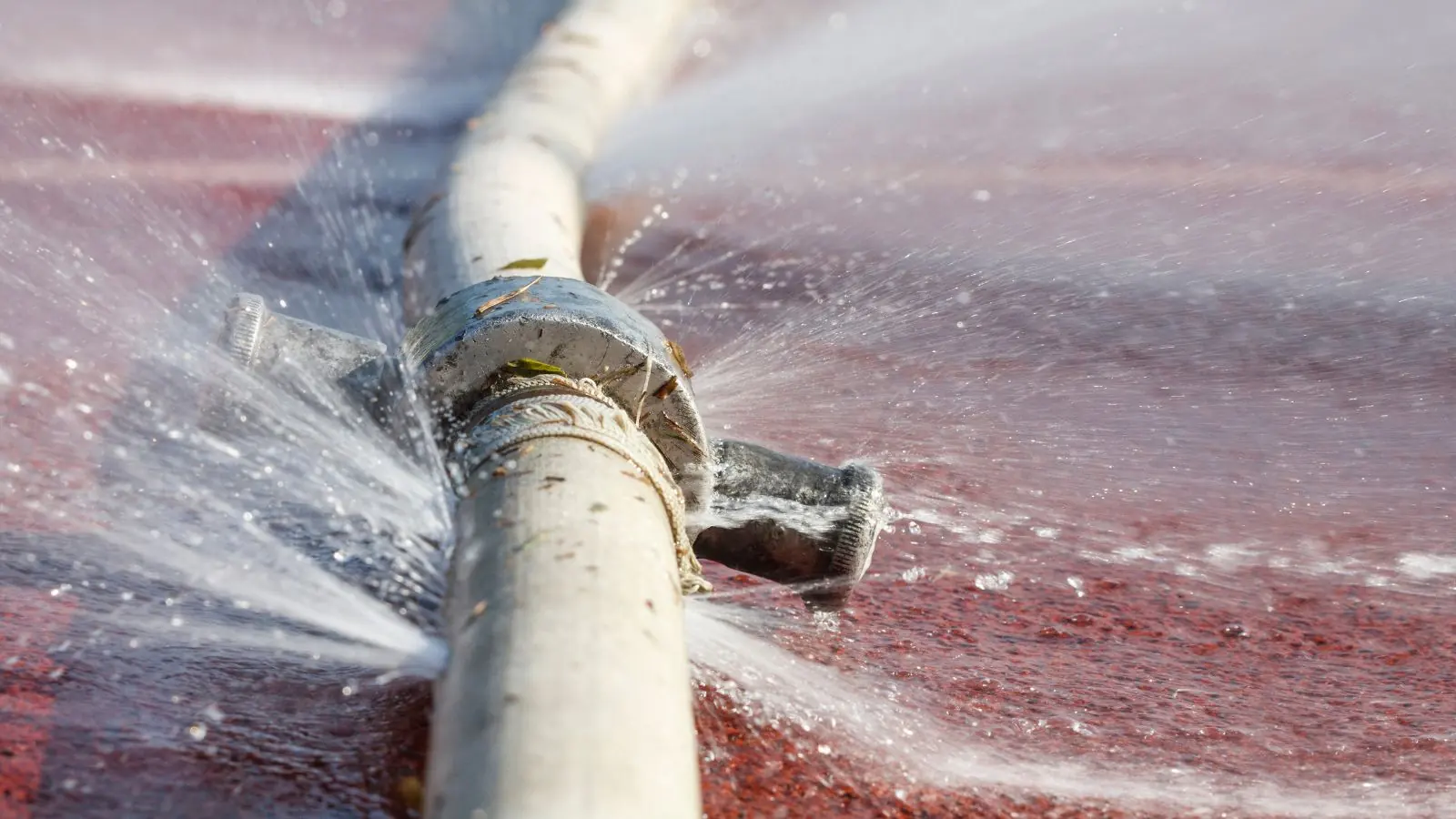
A burst pipe is an emergency, and the dispatch line answers 24/7. Close the main water valve first, then switch off power to wet areas only if you can reach the panel on dry floor, lift valuables off the floor, and keep people and pets out of any water near outlets.
Burst pipe water damage is the wetting of floors, walls and ceilings after a pressurized supply line splits or a joint lets go. The water keeps coming until the valve is shut, which is what separates it from a slow drip.
A pipe has split and water is running
The first job is the valve, not the cleanup. Every minute of flow adds to the volume the crew will have to extract and dry. If water is near a light fixture, outlet or the electric panel, or you smell gas, leave and call the electric utility, the gas utility or 911 before you call the line.
- Go to the main water valve and turn it fully closed.
- Open the lowest cold tap in the house to drain the pressure left in the pipes.
- If the water heater is involved, turn off its power or gas supply.
- Photograph the damage and the broken pipe before anything is moved.
- Call the line. Dispatch aims for a same-day visit when it is available, including nights and weekends.
Where the main valve usually is, and which kind you have
In most houses the main enters through a foundation wall or slab, so the valve sits near where the pipe comes in. Check the basement near the front wall, a utility room, the area around the water heater, or a closet under the stairs. Apartment and townhouse units may have a unit shut-off under the kitchen sink or in a hall closet.
Gate valves have a round wheel and take many turns, and old ones can stick. Ball valves have a short lever, and the lever sits across the pipe when closed. If nothing inside will turn, ask Village Public Works at (630) 350-3435 whether the street-side valve can be closed, and do not force a stuck stem.
| Valve type | How to close it | Watch for |
|---|---|---|
| Gate valve with round wheel | Turn clockwise until it stops | Stems that seize or leak at the packing |
| Ball valve with lever | Turn the lever a quarter turn across the pipe | A lever that looks closed but sits loose |
| Fixture stop under a sink or toilet | Turn clockwise by hand | Isolates one fixture only, not the house |
| Street-side valve | Village or utility staff only | Ask Public Works before trying anything outside |
Why a supply pipe splits under pressure
Supply lines are full and pressurized all day, so a failure sends water out steadily rather than dripping. Common causes include corroded older metal, a joint that was poorly made, a washing machine or ice maker hose that aged out, and ice that expanded inside the pipe. The last one has its own steps on the frozen pipe water damage page.
If the house has a pressure-reducing valve near the main, ask a plumber to check that it is doing its job. Pressure that runs high puts extra load on every joint and hose in the building.
Water spreading or a smell you cannot place? Talk to dispatch now.
(630) 580-6401Where the water goes and what it reaches first
Water from a pipe in a wall or ceiling follows framing and drops through gaps, so the wet spot you see is rarely the whole story. A split on the second floor can end up in the first-floor ceiling, the kitchen cabinets and the basement. Moisture meters and a thermal imaging camera show where it traveled.
Ceilings below
Stains, sagging drywall and bubbling paint appear first. A bulging ceiling holds water and needs careful handling. See ceiling water damage repair.
Wall cavities
Water runs down inside the wall, soaking insulation and the bottom plate. Baseboards cup and paint blisters at the floor line, even where the pipe is feet away.
Floors and subfloor
Hardwood cups, laminate swells at seams, and carpet pad soaks through. Water finds the subfloor and the room below, which hides the real wet area.
Cabinets and furniture
Particleboard swells and does not recover. Solid wood can often dry. Pulling items out early and propping them off the floor saves more than most people expect.
Fixing the pipe and restoring the house are two jobs
A plumber repairs the broken pipe. A restoration crew extracts water, finds hidden moisture and dries the structure. Both are needed, and the order matters, because drying equipment should not run until the source is permanently stopped.
Some plumbing work may need a permit, and the Village Community and Economic Development office can say whether one applies. Inspections are scheduled at 630-350-3413 with at least 24 hours notice, so ask the plumber early.
| Task | Who handles it | Why it matters |
|---|---|---|
| Stop the flow | You, at the valve | Limits how much water has to be removed |
| Repair or replace the pipe | Plumber | Drying cannot finish while a leak continues |
| Extract standing water | Restoration crew with pumps or extraction units | Covered in water extraction |
| Dry walls, floors and ceilings | Restoration crew with air movers and LGR dehumidifiers | Covered in structural drying and dehumidification |
| Insurance documentation | You, with the insurer | Photos and receipts support the claim |
What changes the cost of burst pipe cleanup
The number depends on how long the water ran and how far it spread, which is why it comes after someone sees the building. The main factors are listed below.
Sudden and accidental pipe failure is often covered by homeowner and renter policies, while gradual leaks and neglect often are not. Check your policy, keep receipts for emergency work, and ask your insurer before permanent repairs. You get the scope and price in plain terms ahead of the work. Your own scope sets the real figure, so call (630) 580-6401.
- How long the pipe ran before the valve was closed.
- Which floors and how many rooms the water reached.
- Whether walls or ceilings need to be opened to dry cavities.
- How many air movers and dehumidifiers the structure needs, and for how many days.
- Whether insulation, drywall, flooring or cabinets must be removed and replaced.
Rentals, landlords and clean water from a Lake Michigan supply
About half of Bensenville homes are renter-occupied, per Census and CMAP figures. If a pipe bursts in a rental, tell the landlord or property manager at once, close the unit shut-off if you can find it, and photograph everything. Those photos help sort out who pays and what the landlord must repair.
Water delivered here is Lake Michigan water treated by the City of Chicago and distributed by the Village Public Works Utilities Division. That means a burst pipe starts as drinking water, which gives crews more options to save materials if extraction begins early. The longer it sits, the less that is true. Crews also serve nearby towns, including Schiller Park.
Questions about Burst Pipe Water Damage
Do you handle burst pipe water damage emergencies at night or on weekends in Bensenville?
Yes. The dispatch line is open 24/7 and sends licensed and insured restoration professionals. same-day help is offered when a crew is open, so call even at 3 a.m., after you have closed the main valve.
What do I do first when a pipe bursts?
Close the main water valve, open the lowest cold tap to relieve pressure, and move valuables off the floor. If water is near electrical equipment, stay out and call the utility or 911 first.
I cannot find or turn my main valve. What now?
Check where the supply line enters the house, usually a basement wall, utility room or near the water heater. If it will not turn, do not force it. Ask Village Public Works about the street-side valve and tell the dispatcher.
Does the plumber or the restoration crew come first?
Stop the water first, then bring both. Extraction and drying can begin while the plumber works, but drying equipment should run only after the break is repaired.
Will my insurance cover a burst pipe?
Sudden and accidental pipe failure is often covered, though policies differ. Read yours, ask your insurer what it needs, and take photos before cleanup.
How do I know if water is inside the walls?
Look for paint that blisters, baseboards that cup, a musty smell or warm damp spots. A moisture meter and a thermal imaging camera can confirm it without cutting into the wall first.
Still unsure which page fits your situation? Dispatch can sort it out in one call.
(630) 580-6401