
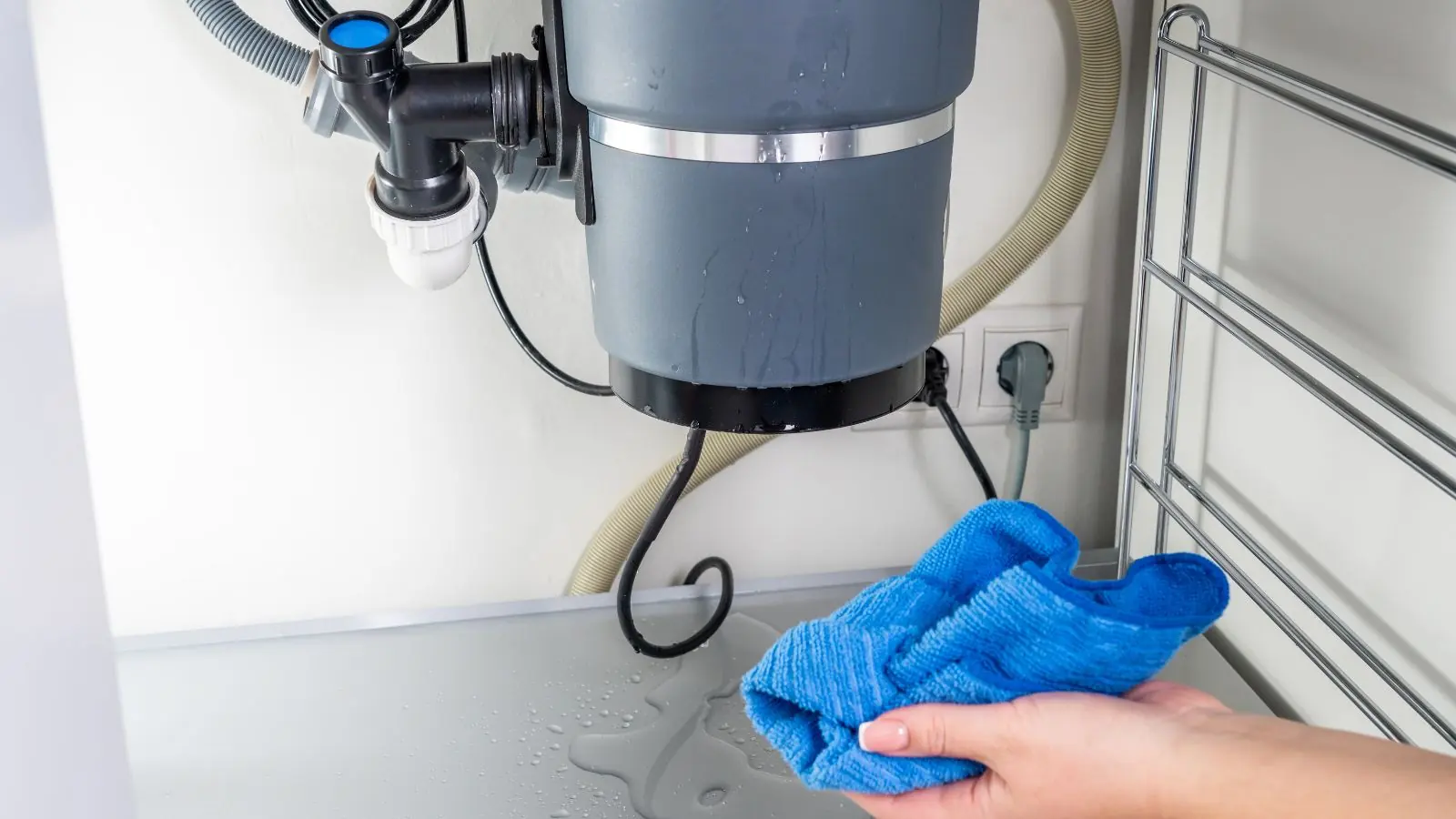
Appliance leak water damage begins at a hose, a valve or a drain line, and it often runs for hours before anyone notices. Dispatch is open 24/7. While you wait, close the appliance's supply valve or the main water valve, unplug the unit only if the outlet and floor are dry, and keep children and pets out of the wet room.
The damage is the water that left the machine: soaked flooring, wet drywall and, in apartments, a ceiling below.
Three machines, three ways to flood a floor
A washing machine moves the most water, a dishwasher hides its leaks behind a toe kick, and a refrigerator ice maker drips quietly for weeks. Knowing which machine you have is half of the shutoff plan, because each one has a different valve in a different place.
The category of water matters too. Supply water from a line is clean when it leaves the pipe, while washer and dishwasher drain water carries soap, food and lint and is treated as grey water in S500 terms. That changes how carpet and padding get handled.
| Appliance | Usual failure point | Where to shut it off | Water type |
|---|---|---|---|
| Washing machine | Supply hose coupling or drain hose | Two valves on the wall behind it | Clean supply, grey drain |
| Dishwasher | Door gasket, inlet valve or drain hose | Valve under the sink or the main | Grey water |
| Refrigerator ice maker | Thin supply tube or saddle valve | Valve behind or under the fridge | Clean supply |
| Window or portable unit | Condensate overflow | Unplug and tilt | Clean condensate |
Appliance leaking onto the floor? Do this before anything else
Speed matters more than neatness here. If the floor is wet around an outlet, an extension cord or a power strip, stay out and cut power at the panel only if the panel is dry. For any gas smell near a dryer or range, leave and call the gas utility or 911 before you call the line. After hours or on a weekend, the line still answers, and same-day response is offered when crews are open to take the job.
- Close the appliance's own shutoff valve. Turn lever handles a quarter turn across the pipe, and wheel handles clockwise.
- If the valve is stuck or buried behind the machine, close the main water valve.
- Stop the cycle and pull the plug if you can reach it dry.
- Soak up standing water with towels, and lift rugs, shoes and cardboard off the floor.
- Take photos and short video of the appliance, the hose and every wet surface.
Washing machine hoses: the leak that keeps running
Most washer floods come from the two supply hoses on the back of the machine, not from the machine itself. Rubber hoses swell, crack and weep at the brass couplings. Braided stainless hoses resist bursting better, though the rubber washers inside the coupling can still dry out.
Check the hoses for bulges, rust at the couplings and white mineral crust. Turn the wall valves off when you leave for a trip, and keep the machine a few inches off the wall so the hoses do not kink. A drain hose that slips out of the standpipe can also dump a whole rinse cycle onto the floor.
Water spreading or a smell you cannot place? Talk to dispatch now.
(630) 580-6401Dishwasher and ice-maker lines hide behind the unit
A dishwasher leak usually shows up as a soft toe kick, buckled flooring at the front of the machine, or a stain on the ceiling below. The cause is often the inlet valve, the drain hose clamp or a cracked door gasket. For water that has gone into the cabinet base and counters, see kitchen water damage restoration, which covers the under-sink and cabinet side.
Ice-maker tubing is smaller than a pencil and runs through the wall or floor to the fridge. When it splits, water pools under the fridge and migrates under the flooring, so the first sign can be a lifted plank in the next room. Pull the fridge out slowly and check the wall behind it.
Drying the floor, subfloor and the room below
Crews check wet areas with a moisture meter and a thermal imaging camera, since flooring that feels dry can hold water underneath. Extraction units remove standing water. Air movers and LGR dehumidifiers then dry the subfloor and wall bottoms, and the work follows ANSI/IICRC S500. A late-night overflow gets the same assessment as a weekday one.
Floor type changes the plan. Water under vinyl plank gets trapped, so planks often come up. Laminate swells at the seams and rarely recovers. Solid wood may be saved by fast drying, which is covered on the hardwood floor water damage page, and wet carpet padding is usually removed even when the carpet is kept.
In a condo or apartment, water drops through the floor into the unit below. That can add a ceiling job, and ceiling water damage repair describes how that part is handled.
What changes the cost of an appliance leak cleanup
The scope and the price are put in front of you before work begins. A short, caught-early washer overflow is a different job than a weeks-long ice-maker drip, and these are the factors that move the number. Insurance note: sudden and accidental water damage is often covered, while a gradual leak or neglected hose often is not, so review your policy and confirm with your insurer. Want a number for your own home? Call (630) 580-6401.
- How long the appliance leaked before it was stopped.
- Whether the water was clean supply or grey drain water.
- Flooring type and whether it can be dried in place.
- How many rooms or units the water reached.
- How many days of air movers and dehumidifiers the structure needs.
Renters, landlords and shared floors in Bensenville
Roughly half of Bensenville homes are renter-occupied, and a leaking appliance in a rental raises a plain question about who pays. Tenants should photograph the leak, tell the landlord in writing and keep their own belongings list. Landlords should save the plumber invoice and the drying readings. That record helps both sides when the insurers get involved.
Water here comes from Lake Michigan, treated by the City of Chicago and carried by the DuPage Water Commission. If a leak looks like it starts before your meter or you cannot find a shutoff, call Village Public Works at (630) 350-3435 and ask who to reach. Nearby readers in Schiller Park and other towns can call the same line for these jobs. Condo and townhome owners near the Metra station can read more on the Downtown Bensenville page.
Questions about Appliance Leak Water Damage
Do you handle appliance leak water damage emergencies at night or on weekends in Bensenville?
Yes. The line is open 24/7 and dispatches licensed and insured restoration professionals. Same-day response is available when crews are available, and the dispatcher will ask which appliance leaked and whether the water is shut off.
Should I replace my washing machine hoses?
If they show bulges, cracks, rust at the couplings or mineral crust, yes. Many people switch to braided stainless hoses, and a plumber can fit them in a few minutes. Shut the wall valves off when the machine is not in use for a long time.
Is dishwasher or washing machine water dirty?
Supply water to the machine starts clean. Drain water from a washer or dishwasher carries soap, food and lint, and S500 treats it as a higher category. That affects whether carpet and padding can be saved.
Will insurance cover an appliance leak?
A sudden failure such as a burst hose is often covered. A slow drip that ran for weeks often is not, and the appliance itself is usually separate. Photograph everything, keep receipts for emergency steps and ask your insurer what applies.
The leak is stopped and the floor looks dry. Do I still need drying?
Often yes. Water moves under flooring and into wall bottoms where you cannot see it, and moisture left behind can lead to mold, which needs moisture to grow. A moisture meter reading shows what is still wet. If mold is already visible, mold remediation follows S520.
My downstairs neighbor has a ceiling stain from my washer. What now?
Shut off the machine's water, document the leak and call your landlord or building manager. The ceiling below may need its own drying. Both units should keep photos and dates.
Still unsure which page fits your situation? Dispatch can sort it out in one call.
(630) 580-6401