
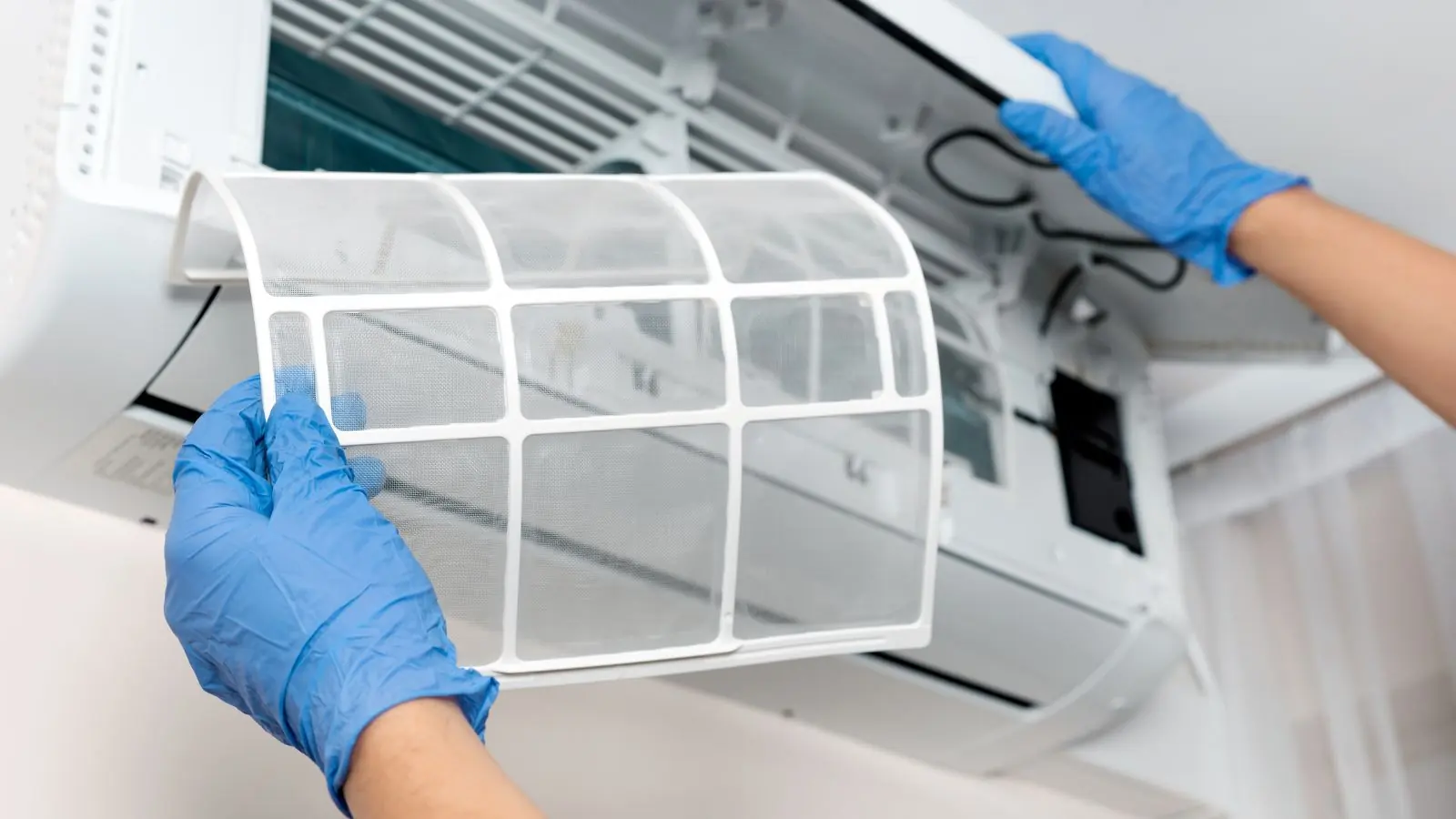
AC leak water damage starts with condensate, the water an air conditioner pulls out of your indoor air as it cools. That water is supposed to leave through a drain line. When the line clogs or the pan cracks, it spills into the attic, closet or ceiling below.
This page covers the drain line, the pan and the air handler, and how wet drywall and insulation get dried afterward.
Why an air conditioner drips: condensate with nowhere to go
During the cooling season, the indoor coil runs colder than the air around it, and moisture condenses on it like water on a cold glass. That water drips into a pan and runs out through a small drain line, usually three-quarter inch PVC, to a floor drain, a utility sink or the outdoors.
Algae and sludge build up inside that line over a season. When it clogs, the pan fills and overflows, or the water backs up and spills at the air handler. The problem is mechanical, but the damage is ordinary water damage to whatever sits below.
Signs of an AC leak: ceiling stains, wet closets and a full pan
AC leaks tend to appear slowly, since the water drips only while the system runs. A stain may show up after the first hot week and fade when the weather cools, then come back larger. That pattern, wet on hot days and dry on cool ones, is a strong clue the source is the air conditioner and not the roof.
- A brown ring or sag on a ceiling under an attic air handler.
- Water around the furnace or air handler in a closet or utility room.
- A pan with standing water, slime or rust.
- A musty smell near the supply vents when the system runs.
- A float switch that has shut the system off by itself.
Clogged line, full pan or frozen coil: three different leaks
Each failure leaves a different trail, and the fix depends on which one it is. A frozen coil is the one people miss, because the ice melts when the system stops and releases a large amount of water at once.
| Failure | What you see | Typical fix | Water risk |
|---|---|---|---|
| Clogged condensate line | Water at the unit, pan full | HVAC tech clears the line | Steady slow overflow |
| Cracked or rusted pan | Drip below the pan, dry line | Pan replacement | Slow seepage |
| Frozen evaporator coil | Ice on lines, then a flood on shutdown | Find the airflow or refrigerant cause | Sudden large release |
| Disconnected or sagging drain | Water at one joint | Reconnect and slope the line | Spills while running |
Not sure which way to go? Talk it through with dispatch.
(630) 580-6401Attic, closet or basement: where the water ends up
An air handler in the attic sends water through insulation and onto the ceiling drywall, which sags before it shows a stain. One in a closet soaks the floor and walls around it. A basement unit usually drains toward a floor drain, but a clog still sends water across the slab.
In an attic, the first sign is often a ceiling stain that appears to be a roof leak. If a stain stays after rain stops and grows only when the AC runs, point the tech toward the air handler. A real roof leak is covered by ceiling water damage repair.
Drying wet insulation, ceiling drywall and framing
Crews map the wet area with a moisture meter and a thermal imaging camera, since a stain can be smaller than the real wet zone. Wet attic insulation is usually removed because it holds water and stays damp for a long time. Sagging drywall is cut out, and framing is dried with air movers and LGR dehumidifiers.
Condensate is typically clean water at first, but it passes through a pan and line full of algae, so crews treat it with care. Work follows ANSI/IICRC S500. Details on the drying process are on the structural drying and dehumidification page.
Stop the system, and let a licensed HVAC technician clear the line before restoration starts. Otherwise the new drywall gets wet again. If mold is already visible, mold remediation is a separate step under S520, and health questions belong to a physician.
What changes the cost of AC leak water damage
Scope and price get explained before work starts. An overflow caught on day one costs far less than a drip that ran all summer, and these are the factors involved. Insurance note: sudden and accidental water damage is often covered, but a gradual leak or lack of maintenance often is not, so check your policy and ask your insurer. Want your real number? Call (630) 580-6401.
- How long the system leaked before anyone noticed.
- How much ceiling drywall and attic insulation is wet.
- Whether the leak reached finished rooms, flooring or furniture.
- Access to the attic or closet, which affects labor.
- How many days of drying equipment the structure needs.
Replacing a unit, permits and rentals in Bensenville
The Village of Bensenville lists furnace and A/C replacement among its residential permit items. If a leak is the last straw for an old system, ask the Village Community and Economic Development office whether a permit applies before you sign a contract, and call 630-350-3413 to schedule an inspection with at least 24 hours notice.
About half of homes in the Village are rented. A tenant with a dripping ceiling should notify the landlord in writing and take dated photos, because the landlord controls the HVAC repair. Landlords should keep service records, since insurers often ask about maintenance on a gradual leak.
Neighbors in Addison and nearby towns can call the same line for AC leak jobs.
Questions about AC Leak Water Damage
Why is my AC leaking water inside the house?
The most common reason is a clogged condensate drain line, which sends the water into the pan and then over the edge. A cracked pan, a frozen coil or a loose drain connection can do the same. A technician can tell you which it is.
Is it safe to keep running the AC while the ceiling is wet?
Turn it off until the drain problem is fixed. Running it adds more water to the same spot. If a ceiling is sagging, keep people out from under it, since wet drywall can fall.
Can I clear the drain line myself?
Some people do, using a wet-dry vacuum on the outside end of the line. If the pan is full, water is on the ceiling or you are not sure, have an HVAC technician handle it. Restoration crews dry the damage but do not repair the system.
Does homeowners insurance cover an AC leak?
Sudden and accidental water damage is often covered. Damage from a slow leak or an unmaintained system often is not. Photograph the damage and ask your insurer what applies before permanent repairs begin.
Will the ceiling stain go away on its own?
The stain can fade, but wet insulation and drywall behind it may stay damp. Dampness left in place can support mold, which needs moisture. A moisture reading shows whether the area is dry.
Do I need a permit to replace an air conditioner in Bensenville?
The Village lists furnace and A/C replacement as a residential permit item. Your HVAC contractor may handle it, so ask who is responsible, and confirm details with the Village Community and Economic Development office.
Still unsure which page fits your situation? Dispatch can sort it out in one call.
(630) 580-6401